
Planting
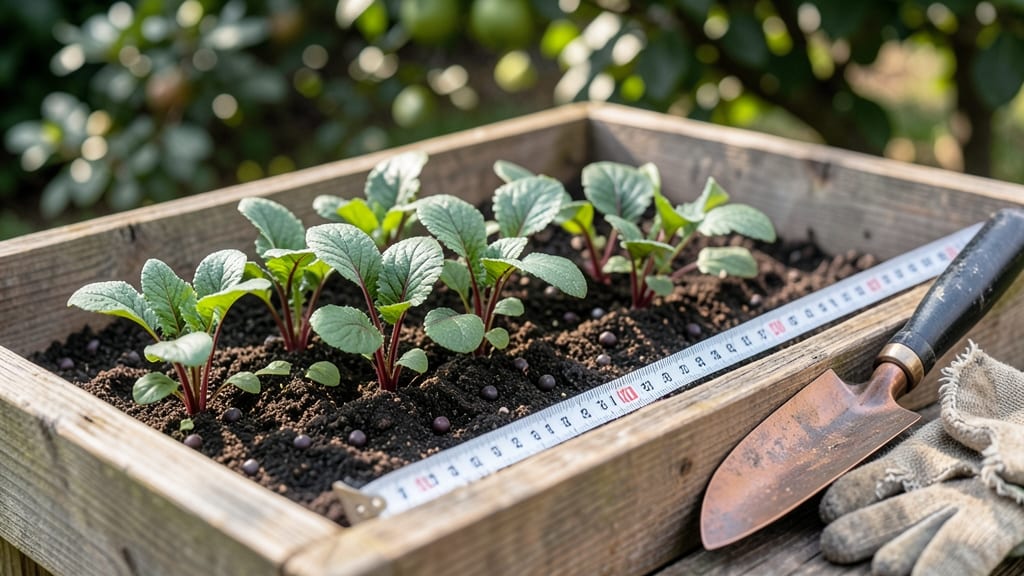
Proper beet seed spacing turns scraggly seedlings into bushy, uniform harvests—and I’ve learned the hard way that cramming seeds too close leads to stunted roots and bitter greens. 🌱 The secret lies in giving each seed its own space: 1-2 inches apart in rows spaced 12-18 inches apart, so roots spread freely without competing.
Most beginners either plant too densely (resulting in tiny beets) or too sparsely (wasting garden space), but this spacing balances both goals beautifully.
Start with loose, well-drained soil—beets hate soggy roots—and sprinkle seeds ¼ inch deep in furrows. A simple trick I use is to mark rows with a stick or string to keep spacing consistent, especially in larger beds.
Thin seedlings to the final spacing once they’re 2-3 inches tall, snipping at soil level to avoid disturbing roots. This step might feel brutal, but it’s what transforms a patchy row into a neat, productive stand of plump beets.
What you’ll end up with is a garden where every beet grows to its full potential—smooth, sweet, and free of deformities from overcrowding. The foliage stays lush and vibrant, and you’ll harvest more uniform, market-ready beets than ever before.
Plus, proper spacing makes weeding and pest control a breeze, since you’re not fighting a jungle of competing plants.
This method works for both baby beets (harvested small) and full-sized storage beets, and it’s just as effective in raised beds or containers as it is in the ground.
The only real mistake is rushing—give those seedlings time to establish before thinning, and you’ll avoid the heartbreak of stunted harvests. Ready to try it?
📚 In This Guide
- What you need
- Instructions
- Tips and common mistakes
- Wrapping up and next steps
What you need
- ● Beet seeds: Choose determinate varieties (like Detroit Dark Red or Golden) for bushier harvests. Aim for 1–2 oz per 100 sq. ft. (about 200–400 seeds).
- ● Seedling trays or pots: If starting indoors, use biodegradable peat pots (2–3 inches deep) or cell packs (50+ cells).
- ● Garden soil or potting mix: Well-draining, loamy soil with a pH of 6.0–7.0. Amend with compost for nutrients.
- ● Planting markers: Small stakes or labeled labels to track rows (especially useful for beet seed spacing in larger plots).
- ● Hand trowel or transplanting spade: For digging small holes (1/4–1/2 inch deep).
- ● Ruler or spacing guide: To measure 1–3 inch intervals between seeds (adjust based on variety).
- ● Watering can or hose with a gentle nozzle: Keep soil moist but avoid oversaturating.
- ○ Row marker or string line: For straight, even rows (optional but helpful for precision).
- ● Seedling heating mat (if starting indoors in cool climates).
- ● Organic mulch (straw or grass clippings) to retain moisture.
- ● Shade cloth (for seedlings if planting in hot weather).
- ● Fertilizer (balanced 10-10-10 or compost tea) for established plants.
Precision planting techniques for beet seed spacing
Perfect spacing ensures strong roots and abundant harvests—here's how to do it right every time.
🌱 Step 1: Prepare the Soil for Optimal Germination
Beets thrive in loose, well-draining soil with a pH between 6.0 and 7.0. Work the top 12 inches of soil to break up compaction and remove rocks that could deform roots. I like to mix in a 2-inch layer of compost before planting to improve fertility and moisture retention.
Test the soil moisture by squeezing a handful—it should hold together but not feel soggy. If your soil is heavy clay, add 1 part perlite to 3 parts soil to improve drainage. Beets hate waterlogged conditions, which can cause rot or forked roots. Rake the surface smooth after amending to create an even seedbed.
🌱 Step 2: Plant Seeds at the Correct Depth and Spacing
Scatter seeds ¼ inch deep in rows spaced 12 inches apart. Beets grow in clusters, so I plant 3-4 seeds every 6 inches within the row—this gives you flexibility for thinning later. Press seeds lightly into the soil with your finger to ensure good soil contact for even germination.
Here's the thing—beet seeds are tiny, so I use a toothpick to create small holes for each seed. This prevents overcrowding and makes thinning easier later. Cover the seeds with a thin layer of fine soil or compost, then gently water the area until the soil is moist but not saturated.
🌿 Step 3: Thin Seedlings for Maximum Root Development
When seedlings reach 2 inches tall—about 3-4 weeks after planting—it's time to thin. Use a small hand trowel or your fingers to carefully remove the weakest seedlings, leaving only the strongest plant every 2-3 inches in the row. This spacing prevents competition and allows roots to swell properly.
Don't rush this step—thinning too early stresses young plants. I wait until seedlings have 2-3 true leaves before thinning, as this indicates they've developed enough root strength to recover. Water the row lightly after thinning to help remaining plants establish.
✂️ Step 4: Monitor and Adjust for Bushy Growth
Beets need full sun (6-8 hours daily) and consistent moisture to develop sweet, tender roots. Mulch around plants with 2 inches of straw or shredded leaves to retain soil moisture and suppress weeds. I check soil moisture daily during hot weather—beets wilt quickly when thirsty.
If you notice leaves yellowing between veins, it's a sign of too much moisture. Adjust watering to 1 inch per week, delivered deeply at the base rather than frequent light waterings. Harvest 60-70 days after planting when roots reach 2-3 inches in diameter for baby beets or 3-4 inches for mature storage varieties.
Tips & tricks for perfect beet planting spacing
These precision strategies will transform your beet harvest from scraggly to spectacular—no guesswork required.
Soil Prep Secret: After amending the top 12 inches with compost, I run a broadfork through the soil to create air pockets without disturbing the surface. This improves drainage while keeping the seedbed perfectly smooth for even seed placement. For heavy clay soils, mix in perlite at a 1:3 ratio—this prevents waterlogging that causes forked roots. The key is creating a crumbly texture that holds moisture without becoming compacted.
Seed Placement Precision: Those tiny beet seeds need perfect spacing to avoid overcrowding later. I mark my 12-inch rows with a garden hose laid flat, then use a toothpick to poke individual holes every 6 inches. This ensures each cluster of 3-4 seeds has room to grow without competing. Press seeds just deep enough so they're covered by a thin layer of soil—no need to bury them deeper than ¼ inch. The goal is firm but gentle contact with the soil.
Thinning Timing: The 3-4 week window for thinning is critical—wait until seedlings hit 2 inches tall with 2-3 true leaves before pulling any. I use a small hand trowel to gently loosen soil around weaker plants, then tug carefully to avoid damaging roots of the plants I'm keeping. Leave the strongest seedling every 2-3 inches, which gives mature beets plenty of room to develop their signature bushy tops and plump roots.
Sunlight Strategy: Beets need that full 6-8 hours of daily sun to develop their sweetness, but too much heat can stress them. I plant my rows north-south to maximize sunlight exposure while keeping plants cooler. During summer heatwaves, I shade young seedlings with lightweight row covers until they establish stronger root systems. The goal is consistent sunlight without heat stress that can cause bolting.
Pro Tips for Beet Seed Spacing
- These precision strategies will transform your beet harvest from scraggly to spectacular—no guesswork required.
- Soil Prep Secret: After amending the top 12 inches with compost, I run a broadfork through the soil to create air poc...
- Seed Placement Precision: Those tiny beet seeds need perfect spacing to avoid overcrowding later. I mark my 12-inch r...
Frequently asked questions
Got questions about beet seed spacing?
You’re not alone! Here are answers to the most common concerns—so you can plant with confidence and avoid common pitfalls.
How close can I plant beet seeds without overcrowding?
For bush beets, space seeds 1–2 inches apart in rows 12–18 inches apart. For long, cylindrical varieties (like Chioggia), thin to 3–4 inches apart once seedlings sprout. Overcrowding leads to small, misshapen beets—so give them room to grow!
When is the best time to thin beet seedlings?
Thin seedlings when they’re 2–3 inches tall (usually 3–4 weeks after sowing). Use sharp scissors or your fingers to snip at soil level—avoid pulling to prevent disturbing roots. Pro tip: Harvest the thinned seedlings for baby greens!
Can I plant beets too early or too late in the season?
Beets thrive in cool soil (50–85°F). Sow seeds 2–4 weeks before your last frost for spring plantings, or 6–8 weeks before fall’s first frost for a second crop. Avoid planting when temps exceed 85°F—they’ll bolt (go to seed) prematurely.
What if my beets are unevenly spaced after germination?
No stress! If spacing is inconsistent, simply thin aggressively to your target spacing (e.g., 3 inches apart). For stubborn gaps, sow extra seeds in a second round 2–3 weeks later to fill gaps. Just mark rows with sticks or string to stay organized.
Are there alternatives to hand-thinning beet seedlings?
Yes! For large batches, try the “dibble method”: Use a stick or dibble tool to poke holes 3 inches apart, then drop 1–2 seeds per hole. This skips thinning entirely. Another trick: Plant in modules (small pots) and transplant seedlings directly into spaced rows.
Wrapping up and next steps
Perfecting your beet seed spacing is the secret to thriving, vibrant harvests! 🌱 Whether you’re a seasoned gardener or just starting, getting the spacing right ensures strong roots, fewer weeds, and easier harvesting.
Now that you’re armed with the best practices, it’s time to roll up your sleeves and plant with confidence—your garden (and taste buds!) will thank you.
Ready to take the next step? Mark your calendar for planting day, gather your tools, and watch those beet seeds transform into a bountiful crop. Happy growing! 🌿