
Lawn
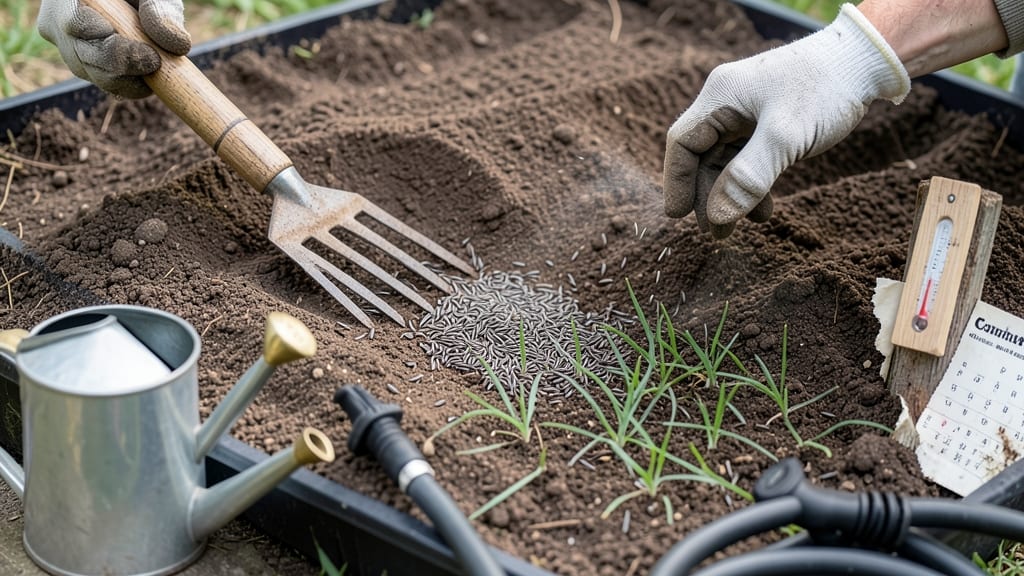
Fall seeding transforms your lawn from patchy to lush before winter sets in—the best time to seed grass is when soil temps hit 60-70°F and nights stay above 55°F. 🌱 That window opens around mid-September in most regions, but exact timing varies by zone.
I learned this the hard way after seeding too early in warm fall weather, only to watch weeds take over before grass got a foothold.
Cool-season grasses like Kentucky bluegrass and fescue thrive in this window because they germinate faster when days shorten and temps drop. The ground stays warm enough for roots to establish while weeds struggle in cooler air.
You’ll need a sharp rake, compost, and quality seed—no fancy tools, just the right prep. My lawn went from bare spots to dense green in just 6 weeks last fall.
Here’s the magic: by planting 4-6 weeks before your first frost, seedlings get strong before winter slows growth. Water lightly daily (not soaked) and keep foot traffic off until grass reaches 3-4 inches.
The result? A lawn that greens up earlier in spring and outcompetes weeds before summer heat arrives.
This works whether you’re patching bare spots or overseeding an entire yard. Northern gardens can seed later into October, while Southern zones should aim for September’s first half. The key is acting before weeds wake up—trust me, they’re watching.
📚 In This Guide
- What you need
- Instructions
- Tips and common mistakes
- Wrapping up and next steps
What you need
- ● Grass seed: Choose cool-season varieties like tall fescue, Kentucky bluegrass, or perennial ryegrass. Quantity depends on your lawn size—aim for 8–12 lbs per 1,000 sq ft for full sun, 12–16 lbs for partial shade.
- ● Lawn rake: A bendable-tine rake (12–18 inches wide) to loosen soil and remove debris.
- ● Garden hose or sprinkler: With a fine mist nozzle for gentle, even watering.
- ○ Soil test kit (optional but recommended): Check pH and nutrient levels—ideal range for seeding is 6.0–7.0. Adjust with lime or sulfur if needed.
- ● Starter fertilizer: A high-phosphorus blend (e.g., 9-24-9 or 10-20-10) to promote root growth. Use ½ lb per 1,000 sq ft.
- ○ Compost or peat moss (optional): Mix ¼–½ inch into bare spots to improve soil texture and moisture retention.
- ● Seed spreader: A broadcast or drop spreader for even coverage (manual or push-type).
- ● Lawn roller (lightweight): 100–150 lbs to gently press seed into soil (only after seeding!).
- ● Epsom salt (magnesium sulfate): 1 tbsp per gallon of water for a quick nutrient boost if soil tests show deficiencies.
- ● Mulching straw or hay: Lightly cover seeded areas with ¼-inch layer to protect seeds from birds and retain moisture.
- ● Weed barrier fabric (for large bare patches): Use landscape fabric to suppress weeds before seeding.
How to time fall grass seeding for perfect cool-season growth
Here's the method I use to get thick, lush lawns every fall—no guesswork, just science-backed timing.
🌱 Step 1: Target the Ideal Temperature Window
Cool-season grasses like fescue and ryegrass thrive when soil temperatures hover between 50-65°F. This typically falls between mid-September and early November in most northern climates, but check your local frost dates. I always seed at least 6-8 weeks before the first hard frost—this gives roots time to establish before winter dormancy.
Use a soil thermometer to confirm temps. Stick it 2 inches deep in the ground during midday. If it reads 60°F or above, you're in the sweet spot. Seeding too early when soil is still warm stresses seedlings, while waiting too late risks frost damage before roots anchor.
☀️ Step 2: Choose Days With Cool, Damp Weather
Look for a 5-day forecast with daytime highs in the 60s°F and nighttime lows above 45°F. Cloudy days with light rain are ideal—natural moisture eliminates the need for frequent watering. I avoid seeding during heatwaves or when rain is predicted within 48 hours of planting, as seeds can wash away.
Morning is the best time to sow. The ground stays cooler and more moist from overnight dew. If you must seed later in the day, water the area thoroughly beforehand to compensate for afternoon sun evaporation.
💧 Step 3: Prepare Soil and Seed Properly
Rake the existing lawn to create a smooth, seed-friendly surface—remove debris and level low spots. For new lawns, till the soil to a 2-3 inch depth to loosen compacted earth. Work in the morning when soil is damp but not soggy. I like to sprinkle a thin layer of compost over the area first to improve seed-to-soil contact.
Spread seed evenly using a broadcast spreader set to the recommended rate for your grass type. Lightly rake again to press seeds into the soil—just enough so they make contact but aren't buried deeper than ¼ inch. Cover with a thin layer of starter fertilizer (follow package instructions) to provide immediate nutrients.
⏰ Step 4: Water Strategically for Germination
Water lightly but frequently—keep the top ½ inch of soil consistently moist for the first 2-3 weeks. Use a gentle sprinkler or soaker hose to avoid dislodging seeds. I aim for ¼ inch of water daily, split into two morning applications. Overhead watering in the evening can promote fungal diseases, so stick to daytime watering.
You'll see first green sprouts in 7-14 days—this is your cue to reduce watering slightly. Once seedlings reach 2 inches tall, gradually increase watering intervals to deep, infrequent soakings (about 1 inch per week). This encourages deep root growth before winter.
🌿 Step 5: Maintain Through Early Winter
Keep mowing once grass reaches 3-4 inches tall, but never cut more than ⅓ of the blade height at once. This prevents scalping and helps roots thicken. In late fall, apply a winterizer fertilizer (high in nitrogen) to strengthen roots before dormancy. I always do this 4-6 weeks before the first frost—never after.
Leave grass clippings on the lawn as natural mulch to retain moisture and nutrients. If a light frost occurs, don't panic—cool-season grasses handle it well. The key is ensuring roots are at least 4 inches deep before winter sets in. You'll know you've succeeded when spring brings a uniform, dense stand with no bare patches.
Tips & tricks for perfect fall grass seeding
These science-backed strategies will help you avoid common pitfalls and maximize your lawn's potential for next spring.
Temperature Timing: The 60°F soil temperature threshold is your golden window—don't guess! I've seen many homeowners seed too early when soil is still in the 70s°F, which stresses seedlings. Test your soil at midday with a thermometer for accuracy. If you're seeding in late fall when temps dip below 60°F, consider using a cold-hardy grass blend designed for your zone. Even a 5°F drop can slow germination significantly.
Weather Watch: That 48-hour rain prediction is a dealbreaker—seeds need to stay put until roots anchor. I always check the 5-day forecast for cloudy days with light rain, not heavy downpours. If you must seed when rain is forecast, consider using a temporary protective cover like landscape fabric until germination occurs. Morning seeding gives you the best chance for overnight moisture retention from dew.
Soil Prep Secret: The 2-3 inch tilling depth for new lawns might seem excessive, but it's worth it for breaking up compacted soil. I've found that adding a thin layer of compost before seeding creates the perfect seed bed. This improves moisture retention and provides immediate nutrients. For existing lawns, focus on raking out debris and leveling low spots—this creates better seed-to-soil contact than tilling.
Watering Wisdom: Those first 2-3 weeks of frequent watering are critical—don't skip them! I've seen many lawns fail because homeowners got busy and let the soil dry out. Use a gentle sprinkler or soaker hose to maintain that ½ inch of consistent moisture without disturbing seeds. A simple way to check is to stick your finger in the soil—it should feel like a damp sponge, not dry sand.
Pro Tips for Best Time To Seed Grass In Fall
- These science-backed strategies will help you avoid common pitfalls and maximize your lawn's potential for next spring.
- Temperature Timing: The 60°F soil temperature threshold is your golden window—don't guess!
- Weather Watch: That 48-hour rain prediction is a dealbreaker—seeds need to stay put until roots anchor.
Frequently asked questions
Got questions about seeding grass in the fall?
You’re not alone! Here are answers to the most common concerns to help you get your lawn looking lush and green.
What’s the ideal temperature range for seeding grass in fall?
For cool-season grasses, aim for soil temperatures between 60–75°F (ideal: 65–70°F). This usually aligns with late summer to early fall, when nights cool down but days stay warm enough for germination. Warm-season grasses, like Bermuda, should be seeded earlier (late spring/summer) when soil is 80–90°F.
How long does it take for grass seed to sprout in fall?
Germination time varies by grass type but typically takes 7–21 days in fall. Cool-season grasses like fescue or ryegrass often sprout faster (7–14 days) in mild fall weather. Keep soil moist and avoid heavy foot traffic until the new grass reaches 3–4 inches tall.
Do I need to water my lawn daily after seeding?
Yes! Water lightly but frequently—about ¼ inch per day—to keep the top 1–2 inches of soil moist. Use a gentle sprinkler to avoid displacing seeds. Reduce frequency slightly after germination (every other day), but avoid overwatering, which can wash seeds away or cause disease.
What if fall arrives early or late? Can I still seed?
Flexibility is key! If fall cools too early (soil <55°F), delay seeding until spring. If it’s too late (soil <45°F), switch to winter ryegrass or overseed with perennial ryegrass, which tolerates cooler temps. Monitor local frost dates and adjust your timeline accordingly.
Should I aerate or fertilize before seeding?
Aeration (yes!)
—2–4 weeks before seeding—to loosen compacted soil and help roots establish. Fertilize (lightly!) with a starter fertilizer (high in phosphorus) at seeding time, then apply a balanced lawn fertilizer 6–8 weeks later. Avoid heavy nitrogen early; it promotes leaf growth over root development.
How do I protect new grass seed from pests or birds?
Use seed blankets or straw mulch (¼–½ inch thick) to shield seeds from wind and birds. For pests like grubs or voles, apply a pre-emergent granular insecticide before seeding. Avoid herbicides—new grass is sensitive! If birds are a problem, try scare tactics like reflective tape or noise makers.
Wrapping up and next steps
Fall is the perfect time to seed your lawn—cool-season grasses thrive in the crisp air, outsmarting weeds and establishing deep roots before winter. By choosing the right window (late summer to early fall) and following best practices, you’re setting your lawn up for lush, resilient growth next spring. 🌱
Ready to take action? Grab your supplies, mark your calendar, and roll up those sleeves—your dream lawn is just a few weeks of prep away! Start planning your fall seeding schedule today.