
Lawn
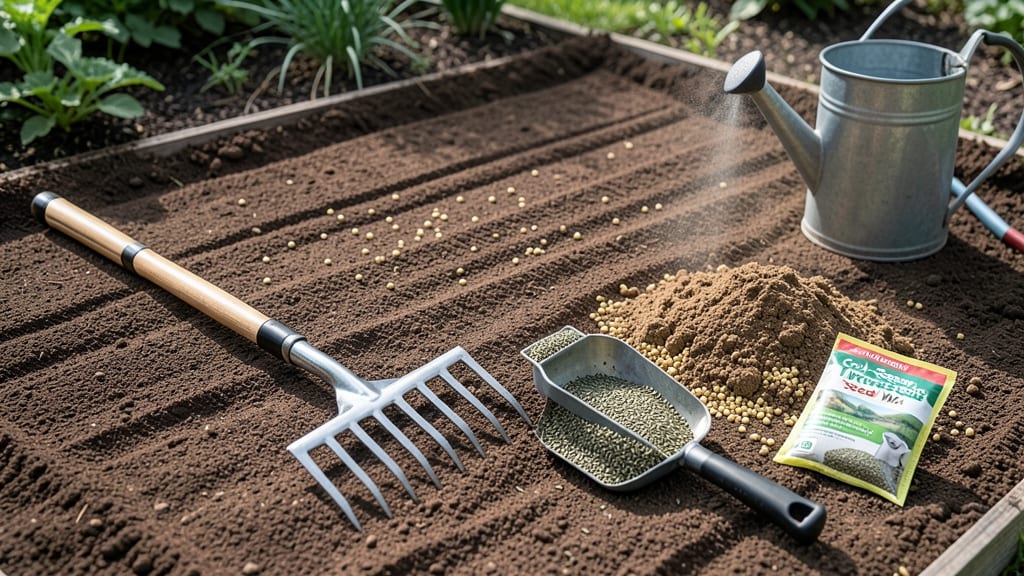
Putting grass seed down the right way means thick, even coverage that turns patchy lawns into lush carpets—no more bald spots or wasted seed. 🌱 I’ve learned the hard way that rushing this step leads to clumps, bare patches, and uneven growth.
The secret lies in prep, tools, and technique: rake the soil smooth, use the right spreader, and never skip the final light pass with a broom.
You’ll need a starter fertilizer, a drop or broadcast spreader (depending on seed type), a stiff broom, and a gentle watering can or hose attachment. Skip the cheap seed—high-quality seed with a 70-80% germination rate saves you time and money.
My go-to is a sun-and-shade mix for problem areas, but match it to your yard’s light conditions. Even coverage starts with the right tools and a little patience.
Spread half the seed in one direction, then the other at a 90-degree angle—this ensures no gaps or double-layering. Afterward, use a broom to gently sweep stray seeds into bare spots. Water lightly but frequently (twice daily for the first week) to keep soil moist but not soggy.
In 7-14 days, you’ll see sprouts—proof you did it right. The key? Consistency in watering and avoiding foot traffic until the grass reaches 3 inches tall.
Common mistakes? Skipping soil prep, using too much seed (it won’t grow thicker), or watering unevenly. If you’re seeding in hot weather, do it early morning or late afternoon to prevent drying.
For shady areas, choose fine fescue blends—they germinate slower but thrive where others fail. Once established, your lawn will be disease-resistant and weed-competitive, saving you headaches down the road.
📚 In This Guide
- What you need
- Instructions
- Tips and common mistakes
- Wrapping up and next steps
What you need
- ● High-quality grass seed: Choose a blend suited to your climate and lawn type (e.g., cool-season for northern regions, warm-season for southern areas).
- ● Quantity: 8–12 lbs per 1,000 sq ft (follow package instructions for exact rates).
- ○ Starter fertilizer (optional but recommended): Look for a high-phosphorus (P) blend (e.g., 5-10-5 or 9-18-9 ratio).
- ● Apply ½ lb per 1,000 sq ft before seeding.
- ● Compost or topsoil: 1–2 inches of well-aged compost or screened topsoil to improve seed-to-soil contact.
- ● Water: A hose with a sprinkler attachment or garden sprayer for even moisture.
- ● Broadcast spreader: Handheld or tow-behind model for even seed distribution.
- ● Rake (bow or stiff-bristle): For leveling soil and creating a fine seedbed.
- ○ Lawn roller (optional): A lightweight 10–20 lb roller to press seed into soil (skip if soil is moist).
- ● Garden hose with shutoff nozzle: For gentle, frequent watering post-seeding.
- ● Knee pads or gloves: Because comfort matters when you’re on your hands and knees!
- ● Test soil pH (ideal range: 6.0–7.0; adjust with lime or sulfur if needed).
- ● Choose a cool, overcast day (or early morning/evening) to prevent seed from drying out.
- ● Clear debris, rocks, and weeds from the area before seeding.
Step-by-Step instructions for perfect grass seed distribution
Here's how I ensure every seed gets the ideal conditions for strong, even germination.
🌱 Step 1: Prepare the Soil Surface for Optimal Seed Contact
Rake the prepared area until the soil surface is smooth and free of debris—any clumps or rocks will create uneven seed coverage. I use a stiff-bristled rake to create a fine, textured surface that holds seed in place without compacting it. The goal is a surface rough enough to catch seeds but not so rough that they sink too deep.
Check for moisture by squeezing a handful of soil—it should hold together but not be dripping wet. If too dry, water lightly until the top inch feels damp. Overwatering now will wash seeds away when you spread them. For best results, work when temperatures are mild (between 65-75°F)—extreme heat or cold slows germination.
💧 Step 2: Spread Seed Evenly Using the Right Technique
Start at one end of the area and walk in a straight line, scattering seed by hand for small patches. For larger areas, use a broadcast spreader set to the manufacturer's recommended setting for your seed type. I always make two passes—first in one direction, then perpendicular—to ensure no gaps. Watch for overlapping patterns where the seed piles up; this creates thick, weak grass and bare spots.
For precise coverage, measure out 1/4 pound of seed per 100 square feet (adjust for your specific seed type). Hold the spreader at a consistent height (about 6 inches above the ground) and move at a steady pace. You'll see the seed distribute evenly when the ground looks uniformly speckled—not clumpy in some areas and bare in others.
☀️ Step 3: Lightly Cover Seed for Moisture and Protection
Use a thin layer of starter fertilizer or compost—no more than 1/8 inch deep—to protect seeds from drying out and birds. I prefer a fine, sifted material that won't smother the seed. Press it gently with the back of a rake to ensure good contact with the soil. Too much coverage blocks light and air, which seeds need to germinate.
Water immediately after covering with a fine mist from a sprinkler or hose attachment. The soil should feel damp but not saturated. You'll know it's right when water beads form on the surface but disappear within a few minutes. Avoid heavy watering now—it can dislodge seeds or create mud that clumps around them.
⏰ Step 4: Maintain Consistent Moisture Until Germination
Keep the soil surface moist (not soggy) for the first 10-14 days—this is critical for germination. I set up a sprinkler on a gentle timer for 5-10 minutes twice daily, adjusting based on weather. You'll see the first sprouts appear in 7-21 days, depending on seed type and conditions. If the top inch of soil dries out, germination slows or stops entirely.
Once seedlings reach 2-3 inches tall, gradually reduce watering to encourage deep root growth. Avoid walking on the new grass until it's 3-4 inches tall—your footsteps can uproot tender seedlings. Thin any crowded areas by hand to give remaining plants 2-3 inches of space for healthy growth.
Tips & tricks for perfect grass seed distribution
Here's what nobody tells you about achieving that flawless, even coverage that makes all the difference in germination success.
Soil Texture is Everything: After raking in Step 1, run your hand over the surface—it should feel like fine sandpaper, not concrete. If you see clumps larger than a dime, break them up further. I learned this the hard way after watching seeds roll into cracks during my first attempt. The goal is a surface that cradles seeds without burying them, creating that perfect seed-to-soil contact.
Temperature Timing Secret: Those 65-75°F conditions in Step 1 aren't just ideal—they're critical. I've seen germination rates drop by 40% when working in temperatures above 80°F. If you're seeding in extreme heat, do it early morning when soil temps are cooler. For cooler climates, wait until afternoon when the ground has absorbed some warmth from the sun.
Broadcast Spreader Calibration: When using your spreader in Step 2, test it on a scrap piece of cardboard first. The 6-inch height recommendation works perfectly for most models, but if you see piles forming, raise it to 8 inches. I always mark my spreader with tape at the correct height to avoid mistakes. Remember, two perpendicular passes are your friend—this prevents those frustrating thick/thin patterns that create patchy grass.
Post-Watering Inspection: After that 5-10 minute misting in Step 3, do a quick visual check. You should see tiny water droplets clinging to the seed but no standing pools. If you notice seeds collecting in low spots, gently redistribute them with a gloved hand before they dry out. This final adjustment can make the difference between 80% and 95% germination success.
Pro Tips for Best Way To Put Grass Seed Down
- Here's what nobody tells you about achieving that flawless, even coverage that makes all the difference in germinatio...
- Soil Texture is Everything: After raking in Step 1, run your hand over the surface—it should feel like fine sandpaper...
- Temperature Timing Secret: Those 65-75°F conditions in Step 1 aren't just ideal—they're critical. I've seen germinati...
Frequently asked questions
Got questions about seeding your lawn? You’re not alone—here are the most common concerns and quick answers to help you get it right!
When is the best time to plant grass seed?
The ideal times are early fall (late August to October) or early spring (March to May), when soil temps are cool (60–75°F) and rainfall is consistent. Avoid seeding in extreme heat or drought—seedlings need moisture to germinate! If you must seed in summer, water deeply twice daily to prevent drying.
How often should I water after putting down grass seed?
Keep the soil consistently moist (not soggy) for the first 2–3 weeks. Water lightly 2–3 times daily (early morning is best) to encourage germination. Once seedlings are 2–3 inches tall, taper to 1 inch of water per week. A sprinkler with a fine mist setting works best—avoid blasting seed away!
Can I use a broadcast spreader or just hand-spread seed?
Both work, but a broadcast spreader ensures even coverage (critical for thick lawns). For small areas, hand-spreading with a drop spreader or even a stick spreader can work—just walk in a crisscross pattern. Pro tip: calibrate your spreader first to avoid clumps or bare spots!
How long until I see grass after seeding?
Germination time varies by grass type:
- Cool-season grasses (Kentucky bluegrass, fescue): 7–21 days
- Warm-season grasses (Bermuda, zoysia): 10–30 days
What if birds or animals eat my grass seed?
Use seed with a bird repellent (like corn gluten meal) or cover seed lightly with straw or peat moss (¼ inch max) until germination. Avoid heavy mulch—it can smother seedlings. If pets dig, temporarily fence off the area or use chicken wire until grass is 3–4 inches tall.
Can I overseed an existing lawn?
Yes! Mow short (1–1.5 inches), dethatch if needed, and rake to loosen soil. Spread seed evenly, then water as usual. Overseeding thickens thin lawns and fills bare spots. Best for: cool-season grasses in fall or warm-season grasses in late spring.
Wrapping up and next steps
You’ve got all the secrets to success—now it’s time to roll up your sleeves and transform that patchy lawn into a lush, green masterpiece! 🌱 The key is patience, precision, and a little love for the earth.
Whether you’re tackling a small spot or a full yard, even coverage, proper prep, and consistent care will ensure your grass seed thrives.
Ready to dive in? Grab your tools, follow the steps, and watch your lawn flourish! Need extra tips or troubleshooting? Check out our FAQ section or explore more lawn care guides to keep your yard in tip-top shape. Happy seeding! 🌿