
Planting
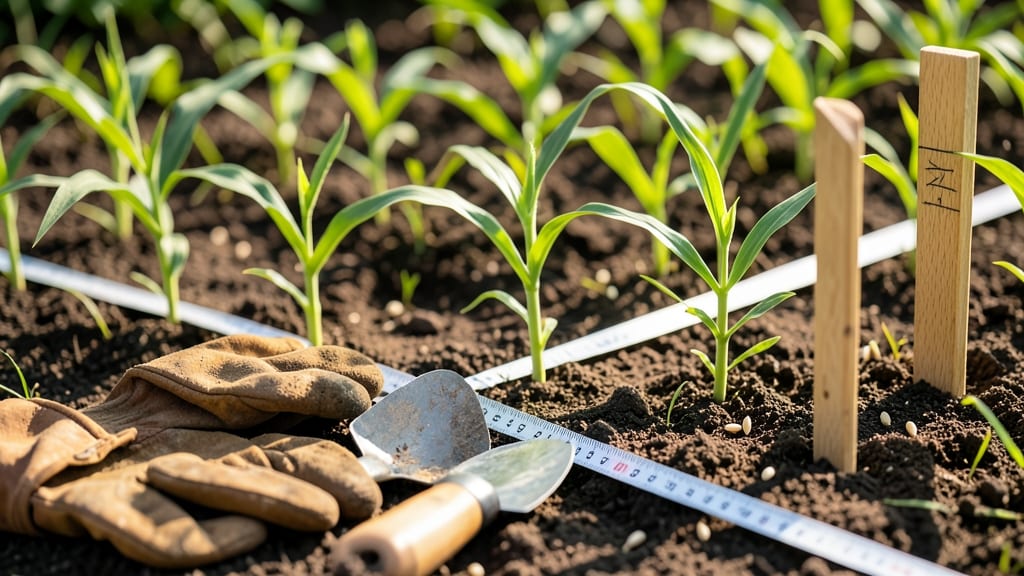
Perfect corn seed spacing means the difference between a 10-foot-tall forest of stalks and a sparse harvest. 🌽 I learned this the hard way when my first attempt left me with skinny plants and half the expected ears.
The right spacing isn't just about numbers—it's about giving each plant room to breathe, access sunlight, and fight off disease. Most home gardeners plant corn in 30-inch-wide rows with seeds spaced 6-12 inches apart, depending on the variety.
Sweet corn needs slightly more elbow room (8-12 inches) than field corn (6-8 inches), and planting in blocks (not straight rows) confuses pollinators and improves yield. The deeper you plant (1-2 inches), the better the roots establish, but don't bury those seeds too deep—they need light to germinate.
You'll see the payoff when stalks reach 5-7 feet with thick, sturdy stems and ears that fill out completely. Proper spacing also means fewer pests and diseases creeping between crowded plants. The result? A garden that looks like a cornfield, not a jungle of tangled stalks.
Adjust for your soil—sandy soil needs wider spacing, while rich loam can handle tighter plantings. And if you're growing multiple varieties, give them their own dedicated space to avoid cross-pollination surprises.
📚 In This Guide
- What you need
- Instructions
- Tips and common mistakes
- Wrapping up and next steps
What you need
- ● Corn seeds: Choose high-quality, certified seeds suited to your climate (e.g., sweet corn, field corn, or popcorn). Quantity: ~100–200 seeds per 100 sq ft (adjust based on variety and spacing needs).
- ● Planting marker or flags: Biodegradable sticks or labeled markers to mark rows and spacing (e.g., 12–18 inches apart for sweet corn). Quantity: 1 per seed or every 2–3 seeds.
- ○ Garden trowel or dibble: A handheld tool for making precise holes (3–4 inches deep). Tip: A corn planter or seed drill (optional but helpful for large plots).
- ● Ruler or measuring tape: For maintaining consistent spacing (e.g., 12–36 inches between rows, depending on variety).
- ● Garden hose with adjustable nozzle: For gentle watering after planting (avoid over-saturating seeds).
- ● Compost or well-aged manure: To enrich soil before planting (1–2 inches mixed into the top 6 inches of soil).
- ● Mulch (straw, grass clippings, or leaves): To retain moisture and suppress weeds (apply after germination).
- ● Seed spacing template: A DIY grid or laser level for large-scale planting to ensure uniformity.
- ● Soil tester kit: To check pH and nutrient levels (ideal range: 6.0–7.0 for corn).
- ● Planting wheel or grid: A circular tool with pre-marked spacing for quick, accurate planting.
- ● GPS-enabled planter (for farms): For large-scale precision agriculture (e.g., John Deere or Case IH models).
- ● Row cover or shade cloth: To protect young seedlings from pests or extreme weather.
How to space corn seeds for maximum yield and strong stalks
Perfect spacing ensures healthy plants, better pollination, and a bountiful harvest. Here's how to do it right.
🌱 Step 1: Prepare the Soil and Mark Your Rows
Corn thrives in loose, well-drained soil with a pH between 6.0 and 6.8. Work in 2-3 inches of compost or aged manure before planting to provide nutrients for those hungry roots. I like to till the soil to a depth of 6-8 inches to break up compaction—corn roots grow deep, and they need room to stretch.
For 4 rows of corn, mark your planting area with 3-foot-wide beds separated by 2-foot walkways. Use a garden hose or string line to create straight rows—corn grows tall and needs support from strong, even spacing from day one. The goal is 36-inch row spacing for easy access and airflow between plants.
🌱 Step 2: Plant Seeds at the Correct Depth and Spacing
Corn seeds are large, so plant them 1 inch deep and 4-6 inches apart within the row. I use my fingers to make small holes—just deep enough to cover the seed completely. Planting too shallow risks drying out the seed, while burying too deep slows germination. For 4 rows, you’ll need about 100-120 seeds total, depending on your row length.
Here’s the trick: plant in a staggered pattern (like a checkerboard) to prevent future shading issues. If you plant all seeds in straight lines, gaps will form where sunlight can’t reach the soil, leading to weak growth. After planting, gently firm the soil around each seed with your hand—just enough to keep it in place without compacting it.
☀️ Step 3: Thin Seedlings for Optimal Growth
Once seedlings reach 6 inches tall (about 2-3 weeks after planting), it’s time to thin. Corn is a heavy feeder, and crowded plants compete for nutrients, leading to weak stalks and poor ears. Use scissors or your fingers to snip or pull seedlings, leaving the strongest one every 12-15 inches in the row. This spacing gives each plant enough room to develop a sturdy stalk and multiple ears.
Watch for first true leaves (the second set after the initial cotyledons) to appear—this is your cue that thinning is coming soon. If you wait too long, the roots will tangle, and you’ll risk damaging the remaining plants. After thinning, water deeply to help the roots recover and establish themselves in the newly opened space.
🌿 Step 4: Maintain Spacing as Plants Mature
As corn grows, keep an eye on leaf growth and stalk thickness. Healthy corn should have broad leaves and thick, upright stalks. If plants start leaning or leaves yellow between stalks, they’re too crowded. Use a garden fork or hand pruners to gently separate stalks if needed, but avoid damaging the roots.
For 4 rows, aim for 3-4 strong stalks per foot by mid-season. If you see ears forming but the stalks are thin, it’s a sign you need to thin further. Corn is forgiving, but proper spacing now means bigger ears and fewer blank stalks later. Mulch around the base with straw or grass clippings to retain moisture and suppress weeds that compete for nutrients.
⏰ Step 5: Harvest at Peak Ripeness
Corn is ready to harvest when the silks turn brown and the kernels are plump and milky when pierced with a fingernail. Wait until most ears on a stalk are ready—corn ripens from the top down. Cut stalks 2 inches above the ear with a sharp knife or pruners. Overcrowded plants may produce smaller ears, so harvesting promptly ensures you get the best flavor and size.
After harvest, save seeds from your best stalks for next year. Let ears dry completely on the stalk, then shell and store seeds in a cool, dry place. Proper spacing now means better seeds and stronger plants for your next crop. That’s the payoff of precision planting!
Tips & tricks for perfect corn planting spacing
These little adjustments can transform your corn harvest from decent to spectacular—trust me, I've seen the difference firsthand.
Soil Prep Secret: Before planting, mix in a thin layer of wood ash (about 1/2 cup per 10 feet of row) to raise soil pH slightly if needed. Corn loves that 6.0-6.8 range, and ash helps buffer acidic soils naturally. I test my soil first with a simple pH kit—it's cheap insurance against weak plants. The deeper you till (those 6-8 inches), the better the roots will anchor, especially in clay-heavy soils where drainage matters most.
Row Layout Hack: For those 36-inch row spacings, use a folded paperclip bent into an L-shape as a spacing guide. The long leg measures 36 inches for between-row spacing, and the short leg marks your 12-15 inch thinning distance. This keeps everything consistent without guessing. And here's what nobody tells you—plant your outer rows slightly closer to the bed edges (about 24 inches instead of 36) to maximize your small garden space without sacrificing airflow.
Thinning Timing: That 6-inch height marker for thinning is your best friend, but I've learned to watch for the third leaf instead of just height. The third leaf means the plant has enough energy to survive the thinning process. Use sharp scissors to cut at the soil line rather than pulling—this prevents disturbing the roots of nearby plants. After thinning, water immediately to help the remaining plants recover faster. The goal is to have your final plants standing about 12 inches apart by the time they're 6 inches tall.
Mulching Strategy: Once your plants reach 12 inches tall, apply a thick layer of straw mulch (3-4 inches deep) around each plant. This conserves moisture, suppresses weeds, and keeps soil temperatures steady—critical during those hot summer days. I've found that mulched plants develop stronger stalks and produce more ears. Plus, the mulch breaks down slowly, adding organic matter to your soil for next year's planting.
Pro Tips for Corn Seed Spacing
- These little adjustments can transform your corn harvest from decent to spectacular—trust me, I've seen the difference firsthand.
- Soil Prep Secret: Before planting, mix in a thin layer of wood ash (about 1/2 cup per 10 feet of row) to raise soil pH slightly if needed.
- Row Layout Hack: For those 36-inch row spacings, use a folded paperclip bent into an L-shape as a spacing guide.
Frequently asked questions
Got questions about getting the perfect corn seed spacing? You’re not alone! Here are answers to the most common queries from gardeners and farmers alike—so you can plant with confidence.
What’s the ideal corn seed spacing for home gardens vs. large farms?
For home gardens, space seeds 6–12 inches apart in rows 2–4 feet apart to allow easy weeding and pollination. On large farms, tighter spacing (e.g., 4–6 inches apart in rows 30–36 inches apart) maximizes yield while balancing plant health. Adjust based on your corn variety and soil fertility!
When is the best time to plant corn seeds with proper spacing?
Corn thrives in warm soil (60°F+), so plant after the last frost when nighttime temps stay above 50°F. For sweet corn, aim for 2–3 weeks after frost in spring. In warmer climates, you can also try a fall planting 90–120 days before the first frost. Always check your local frost dates!
Can I adjust corn seed spacing if my rows are already planted too close?
If your corn is too crowded (e.g., <12 inches apart), thin seedlings to 6–12 inches when they’re 3–5 inches tall. For overcrowded farms, consider hand-thinning or interplanting with shallow-rooted crops (like beans) to optimize space. Avoid transplanting—corn hates root disturbance!
What happens if I plant corn seeds too far apart?
Over-spaced corn (18+ inches apart) may reduce pollination (since corn is wind-pollinated) and lower yields. You’ll also waste seed and space. For best results, stick to recommended spacing and plant block-style (not single rows) to improve cross-pollination. If space is tight, opt for bush corn varieties!
Are there any tricks to ensure even corn seed spacing without a planter?
Yes! Use a stick or dowel marked with your desired spacing (e.g., 6 inches) to create a guide. For large areas, try a DIY spacing tool (like a PVC pipe with notches) or a seed tape for precision. Even a simple string line with clips can help keep rows straight. Pro tip: Plant in grids (not straight lines) to boost pollination!
Wrapping up and next steps
Perfecting your corn seed spacing is the secret sauce to a thriving crop! 🌽 By following the right techniques—whether it’s adjusting for soil type, weather, or variety—you’re setting your plants up for success.
Remember, precision planting isn’t just about numbers; it’s about giving your corn the best chance to grow strong, healthy, and bountiful.
Ready to put your newfound knowledge into action? Grab your tools, mark those rows, and get planting! And if you’re curious about other farming hacks, stay tuned—your next harvest could be even better than this one.