
Propagation
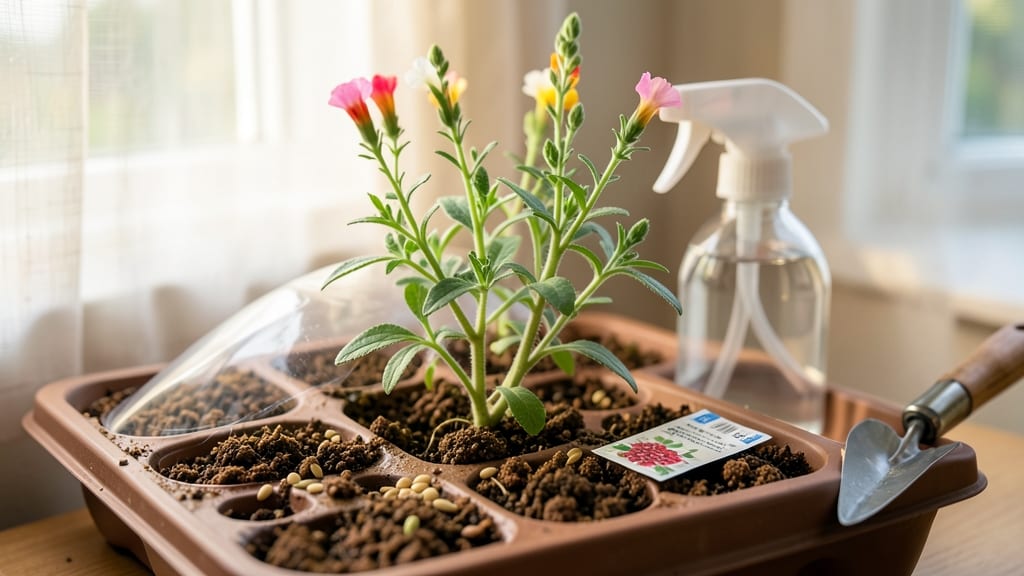
Starting snapdragons from seed indoors with a heat mat trick means blooms by Memorial Day—not July. 🌱 I’ve grown these delicate flowers for years, and the secret to beating slow germination lies in warmth, patience, and a few simple tools most beginners already have at home.
The magic happens in 4-6 weeks before your last frost, when you’ll need just a seed-starting tray, sterile potting mix, and a heat mat set to 70°F.
Snapdragons germinate best in warmth, and this trick cuts germination time in half—no more waiting weeks for those first tiny green shoots to appear. Even my black thumb finally got reliable results after switching to this method.
Once those seedlings pop up, you’ll watch them grow into sturdy, 4-inch-tall plants ready for transplanting. The heat mat keeps them strong, and the process is so simple you’ll wonder why you didn’t try it sooner. No more weak, leggy seedlings struggling to catch up to store-bought transplants.
This method works for all snapdragon varieties, from classic reds to bi-colors and dwarf types. The key is consistency—keep the soil moist but not soggy, and give them 12-14 hours of light daily.
By the time you’re ready to move them outside, your neighbors will be asking where you got your early blooms. Let’s get those seeds started!
📚 In This Guide
- What you need
- Instructions
- Tips and common mistakes
- Wrapping up and next steps
What you need
- ● Snapdragon seeds: Choose Antirrhinum majus varieties (e.g., 'Rocket,' 'Tom Thumb,' or 'Monarch'). Buy 1-2 packets (about 100-200 seeds total) for a good start.
- ● Seed trays or starter pots: Use 4-6 inch trays or 2-3 inch pots (biodegradable or plastic). Aim for 12-24 cells per tray.
- ● Seed-starting mix: A lightweight, sterile mix (e.g., Pro-Mix BX or Black Gold Seedling Mix). Avoid garden soil—it’s too dense!
- ● Heat mat: A seedling heat mat (e.g., Vivosun or GQ Seedling Mat) to keep soil temps at 70-75°F for germination.
- ● Spray bottle: A fine-mist sprayer (e.g., Growneer) to gently water seeds without disturbing them.
- ● Plastic wrap or dome: Keeps humidity high until germination (clear plastic wrap or a propagation dome).
- ● Grow lights: A full-spectrum LED grow light (e.g., Samsung LM300) or fluorescent bulb (12-16 hrs/day). Place 2-3 inches above seedlings.
- ● Fertilizer: A balanced liquid fertilizer (e.g., Jack’s Classic 20-20-20) or fish emulsion (diluted to ½ strength) for early feeding.
- ● Seedling heating pad: For extra warmth if your heat mat isn’t enough.
- ● Humidity dome with vent: Adjustable vents help control moisture as seedlings grow.
- ● pH meter or test kit: Ensure your soil mix is pH 6.0-7.0 (snapdragons prefer slightly acidic to neutral).
- ● Labeling tags: Write seed varieties and dates to track progress.
- ● Tweezers: For delicate seed placement (especially tiny seeds).
- ● Bottom watering tray: Helps maintain even moisture without overwatering.
Step-by-step instructions for growing snapdragons from seed indoors
Here’s the foolproof method I use to get snapdragons blooming faster—no leggy seedlings or weak starts.
🌱 Step 1: Prepare Your Containers and Seed Starting Mix
Fill 2-3 inch deep cell trays or small pots with a sterile, well-draining seed-starting mix. Snapdragons hate soggy soil, so I avoid garden soil or compost-heavy mixes. Moisten the mix until it’s damp like a wrung-out sponge—no puddles. Press it down gently so the surface is firm but not compacted.
I like to tap the tray on the table once to settle everything evenly. This prevents air pockets that can delay germination. If your mix is too dry, add a light spray of water until the top inch feels consistently moist. The goal is to mimic the ideal conditions snapdragons need to pop up quickly.
🌱 Step 2: Sow Seeds at the Right Depth and Spacing
Snapdragons are tiny but pack a punch—sow 1-2 seeds per cell at a depth of about 1/8 inch. Planting too deep makes them struggle to reach the light, while planting too shallow risks drying out. I use a toothpick to make small holes, then drop the seeds in gently. Cover them with a fine layer of mix, just enough to hide them.
Label your trays immediately—snapdragon varieties look identical until they bloom! I write the variety and date on masking tape stuck to the edge. Mist the surface lightly with water until the mix looks evenly damp. Don’t soak it; you’ll drown the seeds before they even sprout.
💧 Step 3: Provide Warmth and Humidity for Germination
Snapdragons germinate best at 70-75°F, so I place the trays on a seedling heat mat set to 75°F. Without this, germination can take 2-3 weeks—with it, you’ll see sprouts in 7-10 days. Cover the trays with clear plastic wrap or a humidity dome to trap warmth and moisture.
Check daily but resist the urge to water. The dome keeps everything humid enough that the soil stays damp without extra watering. Once you see 50% of seeds sprouted, remove the dome immediately. Leaving it on too long causes damping-off, a fungal disease that collapses seedlings overnight.
☀️ Step 4: Move to Bright Light and Prevent Leggy Growth
The instant seedlings emerge, they need 14-16 hours of light daily. A south-facing window rarely cuts it, so I use a grow light positioned 2-3 inches above the plants. Raise it as they grow to keep the light just above their leaves. Without enough light, seedlings stretch toward the source, growing weak and spindly.
Strong snapdragon seedlings have thick stems and dark green leaves. If yours look pale and stretched, lower the light or move them closer. I rotate the trays a quarter turn daily so they grow straight instead of leaning. Once they have 2-3 sets of true leaves, it’s time to thin or transplant.
⏰ Step 5: Thin and Harden Off Before Outdoor Planting
When seedlings are 1-2 inches tall and have 2-3 sets of true leaves, thin to the strongest plant per cell. Use scissors to snip weak ones at the base—don’t pull, or you’ll disturb the roots of the ones you’re keeping. This reduces competition and gives your snapdragons room to grow.
Two weeks before your last frost, start hardening off. Place the trays outside in a sheltered spot for 1-2 hours the first day, then gradually increase time over 10-14 days. By the end, they should handle a full day outside. Transplant on a cloudy day or in the evening to reduce stress. Water deeply at the base to help them settle in.
Tips & tricks for perfect snapdragon seedlings indoors
Here's what I've learned after growing snapdragons for years—these little tricks make all the difference between healthy plants and sad, leggy failures.
The Heat Mat Hack: That 75°F heat mat temperature is non-negotiable for snapdragons. I've tried lower temps, and germination slows to a crawl. If you don't have a heat mat, place your trays on top of your fridge or in a warm spot near your boiler—just make sure it stays consistently warm. The goal is to mimic spring soil temperatures where snapdragons naturally germinate quickly.
Seedling Lighting Secret: For those crucial 14-16 hours of light, I use a simple LED grow light on a timer. Position it just 2-3 inches above the seedlings—closer than you might think! Watch for leaves turning pale yellow as a warning sign of too much light. I also rotate my trays daily to prevent seedlings from leaning toward one side, which creates lopsided growth that's hard to recover from.
Thinning Technique: When it's time to thin to the strongest plant per cell, I use clean scissors to cut at the base rather than pulling. This prevents disturbing the roots of your keepers. I also wait until seedlings are at least 1-2 inches tall—thinning too early stresses the remaining plants. The strongest seedling will have the thickest stem and most vibrant leaves, so choose carefully!
Hardening Off Strategy: For the 10-14 day hardening off process, I start with just 1-2 hours the first day in a sheltered spot. Gradually increase time while watching for wilting—this is your plant's way of saying "too much sun!" I also avoid direct afternoon sun during hardening off, as this is when plants are most vulnerable to sunburn. A covered porch or patio works perfectly.
Pro Tips for Grow Snapdragons From Seed Indoors
- Here's what I've learned after growing snapdragons for years—these little tricks make all the difference between heal...
- The Heat Mat Hack: That 75°F heat mat temperature is non-negotiable for snapdragons. I've tried lower temps, and germ...
- Seedling Lighting Secret: For those crucial 14-16 hours of light, I use a simple LED grow light on a timer. Position ...
Frequently asked questions
Got questions about growing snapdragons from seed indoors? You're not alone! Here are some of the most common queries—plus straightforward answers to help you succeed.
When is the best time to start snapdragon seeds indoors?
For most U.S. climates, start seeds 8–10 weeks before the last frost date. Snapdragons grow slowly, so early starts (like February in cold regions) give them time to mature. Use a heat mat to speed up germination if your home is chilly!
Do snapdragons need cold stratification before planting?
Nope! Snapdragons are not cold-stratified—they germinate best at 65–75°F. Unlike some flowers, they’ll pop up faster with warmth. Just keep soil consistently moist (not soggy) until sprouts appear (7–14 days).
Why aren’t my snapdragon seeds germinating?
Check these fixes:
- Temperature: Too cold? Use a heat mat (70–75°F is ideal).
- Moisture: Keep soil damp but not waterlogged—use a spray bottle.
- Depth: Seeds need light to germinate; press them just below the soil surface.
- Freshness: Old seeds (over 1 year) may fail—buy new packets!
Can I grow snapdragons in small pots or containers?
Yes! Snapdragons thrive in 4–6 inch pots or even cell packs. Just ensure they have drainage holes to prevent rot. Transplant seedlings to larger containers (8+ inches) when roots crowd the pot—usually after 4–6 weeks.
How do I keep snapdragons from getting leggy indoors?
Leggy seedlings happen from lack of light. Move trays to the brightest window (south-facing is best) or add a grow light 12–16 hours daily. Once sprouts have 2–3 leaves, thin to 1 seedling per pot for stronger growth.
What if my snapdragons bolt (flower too early) indoors?
Bolting is common with long daylight exposure or heat stress. To delay flowering:
- Limit light to 12–14 hours/day with a timer.
- Keep temps below 75°F—cool nights (50–60°F) help.
- Use shade cloth if growing near sunny windows.
Wrapping up and next steps
Growing snapdragons from seed indoors is a rewarding journey that starts with patience, warmth, and a little green thumb magic! 🌱 With the right heat mat trick, proper lighting, and consistent care, you’ll soon be watching those tiny seeds transform into vibrant blooms.
Whether you’re a beginner or a seasoned gardener, this early start sets the stage for a stunning outdoor display.
Now that you’ve mastered the indoor basics, the next step? Transplant those seedlings outdoors once temperatures rise and frost has passed. Happy growing—your garden (and future pollinators!) will thank you! 🌸