
Planting
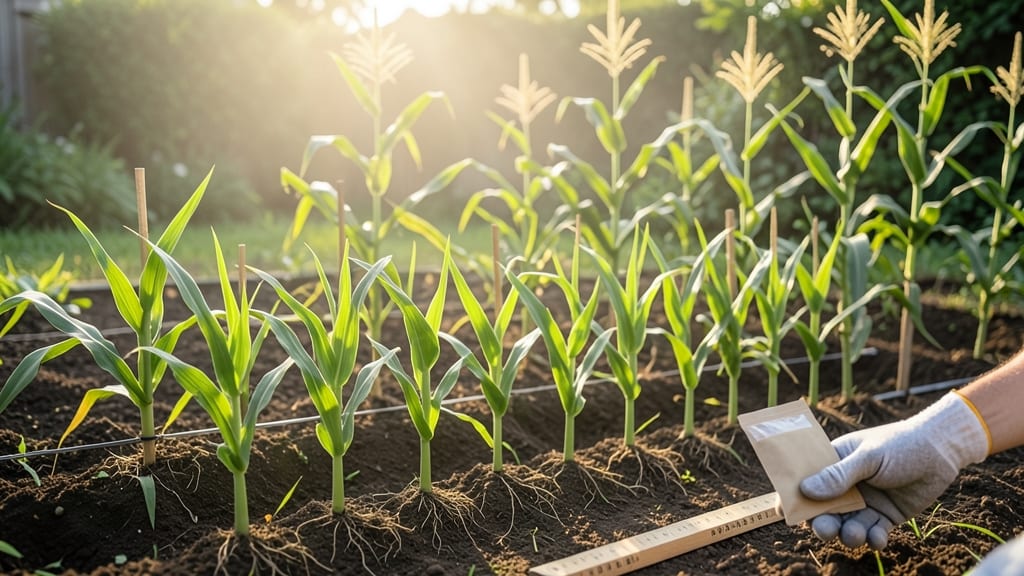
Sweet corn seed spacing isn't just about planting seeds—it's the math behind your harvest. 🌽 Proper spacing ensures every plant gets sunlight, water, and nutrients, which means fewer ears per stalk but more total ears from your garden.
I learned this the hard way after crowding my first row and ending up with tiny, underdeveloped cobs that barely filled a pot. The key numbers are 12-15 inches between plants and 30-36 inches between rows, but there's more to it than just measurements.
Soil prep matters too: loose, well-drained soil with compost mixed in gives roots room to spread. Plant seeds 1-1.5 inches deep and orient them with the larger end down for faster germination.
What you'll end up with is a stand of corn that towers over you by midsummer, each plant producing 1-2 healthy ears instead of struggling for space. The ears stay plump, the silk develops properly, and pollination happens efficiently—no wasted energy or stunted growth.
Common mistakes like overcrowding or uneven spacing can cut yields by half, but once you nail the spacing, you'll see why corn is one of the most rewarding crops to grow. Here's how to get it right from day one.
📚 In This Guide
- What you need
- Instructions
- Tips and common mistakes
- Wrapping up and next steps
What you need
- ● Sweet corn seeds: Choose high-quality, disease-resistant varieties (e.g., Silver Queen, Peaches & Cream). Aim for 1–2 lbs per 25 ft of row (adjust based on seed size).
- ● Garden soil or potting mix: Well-draining, enriched with compost (pH 6.0–7.0).
- ● Planting markers or stakes: Wooden or biodegradable labels (e.g., toothpicks) for spacing guides.
- ● Measuring tape or ruler: For precise 12–18 inch spacing between seeds (check variety guidelines).
- ● Watering can or hose with gentle nozzle: Keep soil moist but avoid oversaturating.
- ○ Gloves (optional but recommended): Protect your hands from dirt and thorns.
- ● Seedling trays or biodegradable pots: For starting seeds indoors (if in a cooler climate).
- ● Row cover or mulch: Protects young plants from pests and retains moisture.
- ● Fertilizer (balanced 10-10-10 or organic options): Apply lightly at planting and mid-season.
- ● Straw or grass clippings: For mulching rows to suppress weeds.
Step-by-step instructions for planting sweet corn with perfect spacing
Sweet corn thrives when planted in blocks, not rows—here's the exact spacing math that guarantees strong stalks and plump ears.
🌱 Step 1: Choose and Prepare Your Planting Site
Sweet corn needs rich, well-draining soil with a pH between 6.0 and 6.8. Work in 2-3 inches of compost before planting to provide nutrients and improve soil structure. I always test my soil first—corn is heavy feeders and won't tolerate poor conditions. If your soil is heavy clay or sandy, amend it with equal parts compost and peat moss to create the ideal balance.
Corn also loves warmth, so wait until the soil temperature reaches at least 60°F before planting. You'll know it's ready when a handful of soil crumbles easily between your fingers. Planting too early in cold soil delays germination and invites rot. For a 4-plant yield, you'll need about 16 square feet of garden space arranged in a 2x2 block—this ensures good pollination and prevents weak ears.
🌱 Step 2: Plant Seeds in Blocks, Not Rows
Corn pollinates by wind, so planting in square blocks (not straight rows) creates a dense "cloud" of tassels that improves cross-pollination. For 4 plants, dig holes 1 inch deep and place 1-2 seeds per hole (the extra gives you a backup if one fails). Space holes 8 inches apart in all directions—this gives roots room to spread without competing for nutrients.
Here's the thing—don't thin later. Corn seedlings are sensitive to root disturbance, and thinning weakens them. Instead, plant the extra seed as insurance. If both seeds sprout, gently snap off the weaker one at soil level once they're 4-5 inches tall. Water lightly after planting to settle the soil around the seeds.
💧 Step 3: Water Deeply and Maintain Moisture
Keep the soil consistently moist but not soggy until germination, which takes 7-14 days depending on your climate. You'll see tiny shoots emerge when the soil feels cool to the touch—this is your cue to reduce watering slightly. Once seedlings reach 6 inches tall, water 1 inch per week, focusing on the base of the plants to encourage deep root growth.
Corn hates dry spells, especially during tasseling (when the pollen-producing flowers appear). If the soil feels dry 1 inch below the surface, water immediately. Mulch with 2-3 inches of straw after germination to retain moisture and suppress weeds. This also keeps ears clean and reduces disease risk.
☀️ Step 4: Monitor Growth and Fertilize Mid-Season
Corn needs full sun (6-8 hours daily) to produce sweet ears. If your plants start leaning toward the light, rotate the block a quarter turn weekly to keep them upright. You'll notice silks (the thread-like flowers) appear 18-20 days after pollination—this is when fertilization matters most.
Apply a balanced fertilizer (10-10-10) when plants are 12 inches tall, using ½ teaspoon per plant. Side-dress with compost tea at the 6-leaf stage to boost nutrients without burning roots. Watch for yellowing lower leaves—this signals nitrogen deficiency, not disease. A quick top-dressing of compost usually fixes it within a week.
⏰ Step 5: Harvest at Peak Sweetness
Sweet corn reaches harvest when the silks turn brown and kernels plump but still milky when pierced with a fingernail. I check 2-3 days after silks brown—this is the peak sweetness window. Harvest in the early morning when sugars are highest. Grasp the ear firmly and twist—it should pop free with a slight resistance.
Don't wait too long—ears turn starchy and tough within 24 hours of silking. For 4 plants, you'll get 2-4 ears per stalk, depending on the variety. Store unshucked ears in the fridge for 3-5 days or blanch and freeze for long-term storage. The key is speed: from silk browning to harvest should take no more than 3 days.
Tips & tricks for perfect sweet corn planting
These simple tricks will help you avoid common mistakes and get the most from your corn patch.
Soil Temperature Check: That 60°F soil temperature is non-negotiable—corn seeds won't germinate properly in cooler soil. I always test temperature by pressing my finger into the ground; if it feels warm but not hot, it's ready. For cooler climates, consider using black plastic mulch a few days before planting to warm the soil faster. This trick can shave a week off your growing season!
Block Layout Precision: The 2x2 block spacing isn't just about numbers—it's about creating that pollen cloud. For larger gardens, maintain the same 8-inch spacing but expand your blocks to 3x3 or 4x4 configurations. The key is keeping all plants within 3-4 feet of each other so wind can carry pollen between them. I've seen gardens with perfect rows produce weak ears because of poor pollination.
Germination Timing: Those 7-14 days for germination can feel like forever, but don't rush it. If you see sprouts emerging, reduce watering immediately—they're sensitive to overwatering at this stage. I mark my calendar when I plant and check daily after day 7. Once you see the first green shoots, you know the rest will follow within days.
Fertilizer Timing: The 12-inch height mark for fertilizer isn't arbitrary—it's when roots are established enough to handle nutrients. I mix the ½ teaspoon of 10-10-10 fertilizer with a little water to create a paste before applying it to the soil surface, about 2 inches from the stem. This prevents burning the tender roots while still giving them a nutrient boost.
Pro Tips for Sweet Corn Seed Spacing
- These simple tricks will help you avoid common mistakes and get the most from your corn patch.
- Soil Temperature Check: That 60°F soil temperature is non-negotiable—corn seeds won't germinate properly in cooler so...
- Block Layout Precision: The 2x2 block spacing isn't just about numbers—it's about creating that pollen cloud. For lar...
Frequently asked questions
Got questions about getting your sweet corn seed spacing just right? You’re not alone! Here are answers to the most common concerns—so you can plant with confidence and enjoy a bountiful harvest.
What’s the ideal sweet corn seed spacing for home gardens?
For home gardens, plant seeds 1 inch deep and 4–6 inches apart in rows spaced 24–36 inches apart. If you’re growing multiple varieties for pollination, space rows 30–36 inches apart to ensure good airflow and cross-pollination. Tighter spacing (like 3-inch hills) works for small plots but may reduce yields.
How soon can I plant sweet corn seeds after the last frost?
Wait until the soil is at least 60°F (15°C) and all frost risk has passed. Most gardeners plant 2–4 weeks after the last frost, depending on your climate. Use a soil thermometer to check—cool soil slows germination. For early starts, try black plastic mulch to warm the soil faster!
Can I plant sweet corn seeds too close together?
Yes! Overcrowding leads to poor air circulation, increasing fungal diseases (like corn smut) and stunted growth. If you accidentally plant too close, thin seedlings to 6–12 inches apart once they’re 4–6 inches tall. Pro tip: Use a hand trowel for precision—it’s gentler than fingers!
What’s the best alternative if I don’t have enough space?
Try square-foot gardening: Plant 1 seed per square foot in a 4x4-foot grid (16 seeds total). For vertical space, use trellises or cages with dwarf varieties like ‘Golden Bantam.’ Just ensure each plant gets at least 12 inches of space to avoid competition. Bonus: This method saves water and makes harvesting easier!
My sweet corn plants look weak—did I space them wrong?
Weak plants often signal overcrowding or poor soil. Check spacing first—if rows are closer than 24 inches, thin immediately. Also, ensure soil is rich in nitrogen (use compost or a balanced fertilizer). Yellow leaves? Add Epsom salt (1 tbsp/gallon) for magnesium. If pests like corn earworms are the issue, try row covers early in the season.
Wrapping up and next steps
Perfecting your sweet corn seed spacing is the secret sauce to a bountiful harvest! 🌽 With the right math—like 12–18 inches between plants and 24–36 inches between rows—you’ll grow healthier ears, reduce competition, and boost yields.
Don’t stress over perfection; just follow these proven guidelines, and you’ll be on your way to a garden full of sweet, juicy corn.
Ready to plant with confidence? Grab your seeds, mark your rows, and get growing! For extra tips, check out our planting calendar to time your harvest just right. Happy gardening! 🌱