
Planting
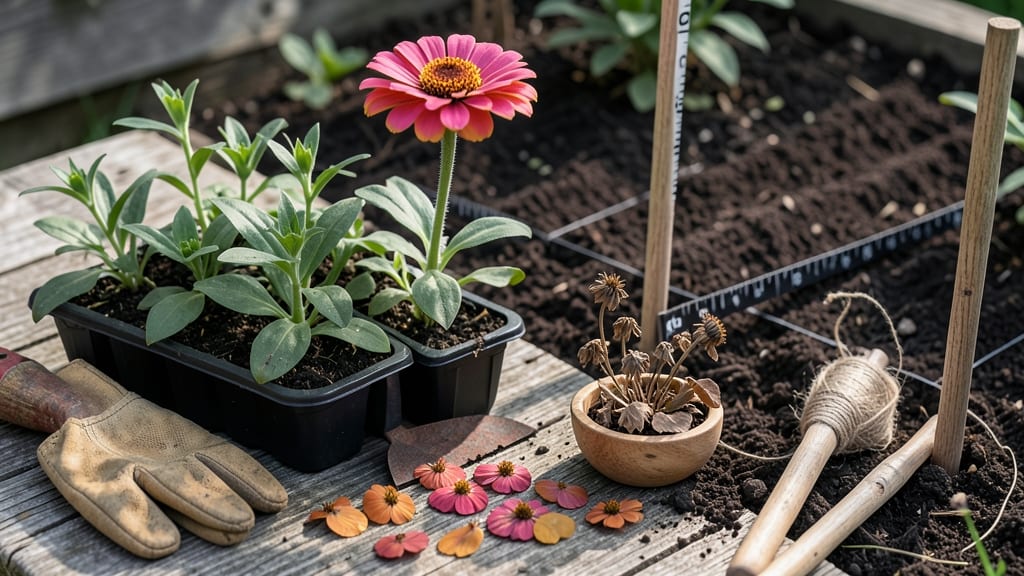
Perfect zinnia seed spacing means 3-4 inches apart for those bushy, blooming giants that steal the show every summer. 🌻 I learned the hard way—crowding seeds leads to leggy stems and fewer flowers, while proper spacing gives you compact plants packed with blooms from July through frost.
Start with well-draining soil and full sun (6+ hours daily), then plant seeds ¼ inch deep in rows spaced 18 inches apart. This airflow keeps foliage healthy and prevents powdery mildew, while giving each plant room to grow into its full, vibrant potential.
By mid-summer, you'll have foot-tall plants bursting with color, each stem heavy with dinnerplate-sized blooms. The key is patience—thin seedlings early to avoid competition, and watch your garden transform into a pollinator paradise. Works for all zinnia varieties, from dwarf 'Thumbelina' to towering 'Benary's Giant'.
Here's how to get it right the first time!
📚 In This Guide
- What you need
- Instructions
- Tips and common mistakes
- Wrapping up and next steps
What you need
- ● Zinnia seeds: Choose heirloom or hybrid varieties (e.g., 'Benary’s Giant,' 'Profusion'). Aim for 50–100 seeds depending on your planting scale.
- ● Seed starting mix: 1–2 cubic feet of lightweight, well-draining potting soil (sterilized to prevent disease).
- ● Containers or seed trays: For direct sowing: Prepare garden beds or use biodegradable seedling pots (3–4 inches deep).
- ● For indoor starts: 2–3 seed trays (10x20 inches) with drainage holes.
- ● Garden soil (if direct sowing): Loosen 12–18 inches deep in your planting area and amend with 1–2 inches of compost.
- ● Hand trowel or transplanting spade: For digging and spacing seeds ¼–½ inch deep.
- ● Ruler or spacing guide: A 6-inch or 12-inch measuring tape to maintain 12–18 inches between seeds (for bushy zinnias) or 6–8 inches for dwarf varieties.
- ● Misting bottle or watering can: With a fine rose nozzle to keep seeds moist without disturbing them.
- ○ Garden twine or stakes (optional): For marking rows if spacing feels tricky.
- ● Sunlight: Full sun (6+ hours daily)—zinnias are sun-worshippers!
- ● Temperature: Wait until soil is at least 55°F (13°C) (after last frost for most climates).
- ● Water source: Consistent moisture (but avoid soggy soil).
- ● Patience: Germination takes 7–14 days—stay consistent!
Precision zinnia seed spacing for maximum blooms
Here's how to plant zinnias so they grow full, sturdy, and packed with flowers—no more leggy stems or sparse blooms.
🌱 Step 1: Prepare the Soil for Optimal Germination
Zinnias thrive in well-draining soil with a pH between 6.0 and 7.0. Loosen the top 6 inches of soil with a garden fork or tiller to break up compaction. Work in 2-3 inches of compost or aged manure to provide nutrients without overwhelming young roots. This ensures strong root development from the start—weak roots mean weak stems, which leads to flopping plants later.
Rake the surface smooth but not compacted. Zinnia seeds are tiny, so a fine texture helps them make good contact with the soil. If your soil is heavy clay, mix in 20% perlite or sand to improve drainage. Moisten the soil to a depth of 1-2 inches before planting—it should feel like a wrung-out sponge, not dripping wet.
🌱 Step 2: Plant Seeds at the Correct Depth and Spacing
Zinnia seeds are 1/8 inch in diameter, so plant them 1/4 inch deep—any deeper and they’ll struggle to reach the surface. Use your finger to make small furrows or individual holes, spacing them 12-18 inches apart for single-stemmed varieties like 'Benary’s Giant' or 6-12 inches apart for bushier types like 'Profusion' or 'Zahara'. Crowding seeds too close leads to competition for light and nutrients, resulting in weak, spindly plants.
Drop 2-3 seeds per spot—zinnias have a low germination rate, and thinning later can damage delicate stems. Cover lightly with soil, then mist gently with water until the surface looks uniformly damp. Avoid heavy watering, which can bury seeds too deep or wash them away. Place a small marker at each row to avoid disturbing seedlings when they emerge.
💧 Step 3: Thin Seedlings for Strong, Bushy Growth
When seedlings reach 2-3 inches tall (about 3-4 weeks after sowing), it’s time to thin. Use sharp scissors or your fingers to snip or pull the weakest seedlings at the base, leaving only the strongest 1-2 plants per spot. This prevents overcrowding, which stresses plants and invites powdery mildew. Space remaining seedlings 12-18 inches apart for single-stemmed types or 8-12 inches apart for bush varieties.
Thinning might seem cruel, but you’ll see the difference immediately—plants will grow thicker stems and fuller foliage without competing for resources. Water the base of the remaining seedlings after thinning to help them recover. If you’re transplanting, do so on a cloudy day to reduce stress, and keep the soil ball intact to preserve roots.
☀️ Step 4: Provide Sun and Support for Continuous Blooms
Zinnias need full sun (6-8 hours daily) to produce their best blooms. After thinning, ensure they’re in a location with unfiltered sunlight—partial shade leads to leggy growth and fewer flowers. If using stakes or cages, insert them now before plants get too tall. Tall varieties like 'State Fair' need 6-foot stakes, while bush types benefit from 4-foot cages to support heavy flower heads.
Water at the base (not overhead) to keep foliage dry and prevent fungal diseases. Let the top 1-2 inches of soil dry out between waterings—zinnias are drought-tolerant once established, but consistent moisture early on encourages strong root systems. Deadhead spent blooms regularly to encourage nonstop flowering through the season.
✂️ Step 5: Maintain Spacing for Airflow and Disease Prevention
As plants mature, prune back leggy stems to encourage bushier growth. Pinch back the tips of young plants to promote branching—this creates a fuller plant with more blooms. Avoid over-pruning, though; zinnias flower best when they’re not overly stressed. If you notice yellowing leaves, it’s often a sign of powdery mildew, which thrives in crowded, humid conditions. Space plants properly from the start to reduce airflow issues.
Mulch around the base with 1-2 inches of straw or shredded leaves to retain moisture and suppress weeds. This also keeps soil temperatures stable, which is crucial for zinnias in hot climates. By mid-season, your properly spaced zinnias will be bursting with blooms—a far cry from the sparse, weak plants that result from poor spacing.
Tips & tricks for perfect zinnia planting
These precision planting strategies will transform your zinnias from sparse stems to lush, blooming powerhouses—no more flopping or weak growth.
Soil Preparation Secret: In Step 1, don't just loosen the soil—break up any remaining clumps larger than a quarter. Zinnia roots need direct contact with fine soil particles to establish quickly. For heavy clay soils, mix in that 20% perlite or sand thoroughly; just sprinkling it on top won't improve drainage where roots need it most. The goal is to mimic the loose, well-draining conditions zinnias crave in their native prairie habitats.
Thinning Technique: When you reach Step 3 and those 2-3 inch seedlings appear, use a pair of clean, sharp scissors to cut seedlings at soil level rather than pulling. This prevents disturbing the roots of your keepers. Work on a cloudy day or late afternoon to reduce transplant shock—you'll notice healthier recovery in the remaining plants. The 12-18 inch spacing for single stems might feel generous, but trust me: crowded zinnias develop weak stems that can't support their own flower heads.
Sunlight Strategy: The 6-8 hours of full sun in Step 4 is non-negotiable, but here's the pro move: rotate your planting orientation every 2-3 weeks. This ensures even sunlight exposure all around each plant, preventing lopsided growth. For container growers, place pots on a rotating tray or simply turn them weekly. This simple adjustment creates more uniform plants with better bloom production.
Support System: In Step 4, don't wait until plants are top-heavy to add stakes or cages. Insert those 6-foot stakes or 4-foot cages immediately after thinning when plants are still manageable. The roots will grow around the supports, creating stronger anchorage. For bush varieties, use tomato cages instead of stakes—they provide 360-degree support that prevents leaning in windy conditions.
Pro Tips for Zinnia Seed Spacing
- These precision planting strategies will transform your zinnias from sparse stems to lush, blooming powerhouses—no mo...
- Soil Preparation Secret: In Step 1, don't just loosen the soil—break up any remaining clumps larger than a quarter. Z...
- Thinning Technique: When you reach Step 3 and those 2-3 inch seedlings appear, use a pair of clean, sharp scissors to...
Frequently asked questions
Got questions about getting your zinnia seeds just right? You’re not alone—proper spacing can make or break those dreamy blooms! Here are answers to the most common queries to help you plant with confidence.
What’s the ideal spacing for zinnia seeds in a garden bed?
For bushy zinnias, space seeds 6–12 inches apart in rows spaced 12–18 inches apart. If you’re growing dwarf varieties, you can snuggle them closer (4–6 inches apart). Crowding leads to leggy stems and fewer blooms—so give them room to shine!
How soon can I thin zinnia seedlings after germination?
Once seedlings have 2–3 true leaves (about 2–3 weeks after sowing), thin them to your desired spacing. Use sharp scissors to snip unwanted seedlings at soil level—this avoids disturbing roots and gives your zinnias a head start.
Can I plant zinnias closer together in containers?
In pots or containers, space seeds 3–4 inches apart for dwarf zinnias or 4–6 inches for taller varieties. Just ensure your container has drainage holes—zinnias hate soggy feet!
What if my zinnias get too crowded after planting?
If you notice leggy stems or sparse blooms, it’s time to thin again or transplant seedlings to a larger area. Zinnias are resilient—just gently loosen roots and replant in well-draining soil. Bonus: Transplanted zinnias often rebound with even more vibrant blooms!
Does seed spacing change if I’m sowing zinnias for fall blooms?
Not really! Follow the same spacing rules, but time your sowing 8–10 weeks before your first frost for late-season color. Just be mindful of shorter daylight hours—zinnias may bloom less prolifically but still reward you with cheerful faces!
Wrapping up and next steps
Mastering zinnia seed spacing is your ticket to a garden bursting with vibrant blooms! 🌸 By following the right spacing—whether for bushy varieties (6–12 inches apart) or towering giants (12–18 inches)—you’ll ensure strong stems, abundant flowers, and minimal competition. Don’t let perfect spacing intimidate you—just a little patience and precision go a long way!
Ready to transform your garden? Grab your seeds, mark those rows, and get planting! Once your zinnias take root, you’ll be rewarded with weeks of cheerful color—perfect for cutting, pollinators, or just admiring. Happy growing! 🌱✨