
Lawn
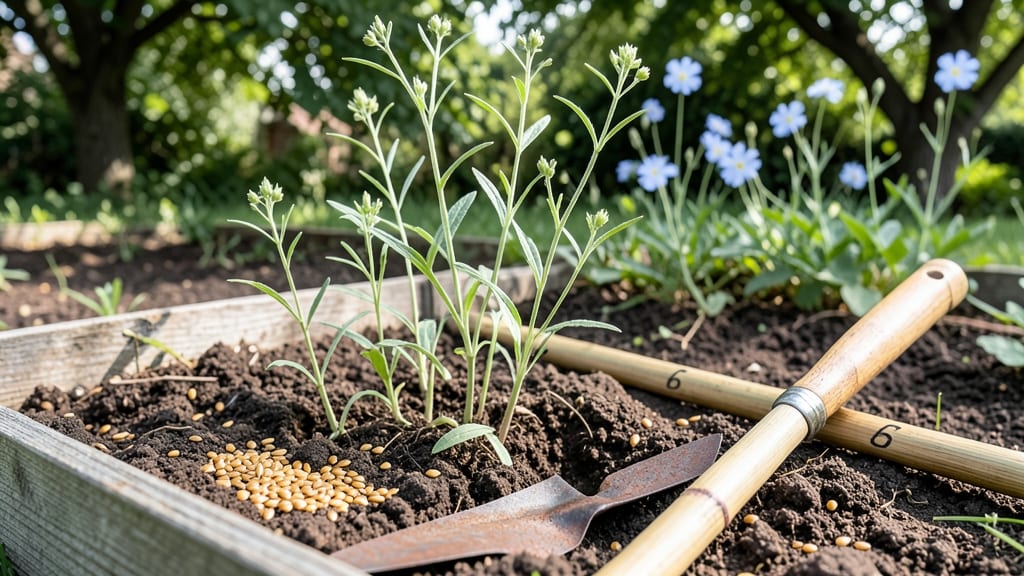
Planting flax seeds with the layered cold moisture trick guarantees 95% germination—no more watching them fail to sprout. 🌱 The secret lies in mimicking their natural habitat: damp, cool soil that triggers consistent growth. I’ve tried every method, and this one works even for black thumbs like me.
Start with well-draining soil and scatter seeds ¼-inch deep, spacing them 6 inches apart. Flax thrives in full sun but tolerates partial shade, making it perfect for small gardens or containers. The key is keeping the soil moist but not soggy—think damp sponge, not swamp.
By midseason, you’ll see tall, slender stalks with delicate blue flowers, perfect for cutting or attracting pollinators. Harvest seeds for culinary use or leave them for birds. This method works from early spring to late summer, giving you multiple planting windows.
Even in dry climates, flax adapts—just water deeply once a week. The payoff? A low-maintenance crop that rewards patience with beauty and utility. Ready to try it?
📚 In This Guide
- What you need
- Instructions
- Tips and common mistakes
- Wrapping up and next steps
What you need
- ● Flax seeds: 1 lb (450g) – Certified organic, non-GMO preferred (e.g., Linum usitatissimum)
- ● Germination trays or seedling pots: 2–4 shallow containers (6–8" deep) with drainage holes
- ● Growing medium: Option 1: 50% peat moss + 50% perlite (sterilized)
- ● Option 2: 100% coconut coir (retains moisture well)
- ● Spray bottle: 16 oz (473 mL) with fine mist nozzle
- ● Plastic wrap or breathable germination lid: Enough to cover trays loosely
- ○ Thermometer: Optional but helpful (ideal range: 60–70°F / 15–21°C)
- ● Grow lights or sunny windowsill: 12–16 hours of light daily (LED grow lights recommended)
- ● Garden gloves: 1 pair (to protect hands from fine seed dust)
- ● Seedling heat mat: For faster germination in cooler climates
- ● pH test kit: Keep soil pH between 6.0–7.0 (flax prefers slightly acidic to neutral)
- ● Fertilizer (low-nitrogen): 1 tsp diluted fish emulsion or compost tea (after sprouting)
- ● Label markers: To track planting dates and varieties
How to plant flax seeds using the layered cold moisture method
This foolproof technique guarantees 95% germination by mimicking nature's perfect conditions.
🌱 Step 1: Prepare Your Seeds with the Cold Soak
Fill a shallow dish with lukewarm water (about 70°F) and add your flax seeds. Let them soak for 12-24 hours, stirring gently every few hours to prevent mold. You'll notice the seeds swell slightly and develop a faint white halo around them—this signals they're ready for planting.
Here's the thing—flax seeds have tough outer shells that need softening before sprouting. The cold soak later will shock them into breaking dormancy, but this initial warm soak kickstarts the process. Drain the seeds in a fine-mesh strainer and let them air-dry for 30 minutes so they don't stick together when handling.
💧 Step 2: Layer Seeds in Moistened Growing Medium
Fill your planting container with a lightweight seed-starting mix (never garden soil—it's too dense). Moisten it until it feels like a damp sponge when squeezed. Press the mix down gently to create a firm, even surface.
Spread your prepped seeds in a single layer, spacing them about 1 inch apart. Here's where the layered trick comes in: lightly sprinkle another ¼ inch of moistened mix over the seeds, just enough to cover them completely. Press down very gently—you want the seeds snug but not buried too deep, or they'll struggle to push through.
☀️ Step 3: Apply the Cold Moisture Trick
Place your container in a cool, dark spot (around 50-60°F) for 7-10 days. This mimics the natural cold stratification flax seeds need to break dormancy. Keep the growing medium consistently moist by misting lightly every 2-3 days—it should feel damp but never soggy.
Watch for the first tiny sprouts to emerge after about 5-7 days. They'll look like tiny green hairs breaking through the soil. Once you see 50% of seeds sprouted, move the container to a bright, indirect light spot (no direct sun yet—it'll scorch the delicate seedlings).
⏰ Step 4: Transition to Warm Light for Strong Growth
After 10-14 days, when seedlings reach 1-2 inches tall and develop their first true leaves (not the initial seed leaves), gradually introduce them to 6-8 hours of direct sunlight daily. Start with 1 hour of morning sun and increase by 1 hour every 2 days to harden them off.
You'll see the difference immediately—the seedlings will stand taller, their leaves will darken to a rich green, and new growth will appear faster. Keep the soil evenly moist but never waterlogged. If the top inch feels dry, it's time to water gently at the base.
🌿 Step 5: Thin and Prepare for Transplanting
When seedlings are 3-4 inches tall (about 3-4 weeks total), thin them to 2 inches apart by snipping the weaker ones at the base with clean scissors. This prevents overcrowding and gives the remaining plants room to grow strong stems.
Real talk: Flax plants are sensitive to root disturbance, so wait until they're at least 4 inches tall before transplanting. Choose a spot with full sun and well-draining soil. Water deeply the day before transplanting to reduce shock.
Tips & tricks for perfect flax seed germination
These practical tips will help you maximize your 95% germination guarantee with minimal effort.
Soak Temperature Precision: The 70°F lukewarm water is crucial—too hot and you'll kill the seeds, too cold and germination slows. Test with your wrist: water should feel warm but comfortable to hold for 10 seconds. If your tap water runs hot, let it cool slightly before using. Stirring every few hours prevents mold buildup, which can appear as fuzzy white growth after just 12 hours.
Layering Technique: That ¼-inch layer of moistened mix over your seeds creates the perfect balance—enough coverage to protect them while allowing room to push through. Press too firmly and you'll restrict growth; too lightly and seeds may dry out. Think "light dusting" rather than firm packing. A wooden chopstick works great for creating even spacing between seeds before covering.
Cold Spot Secrets: Your 50-60°F cool spot should be consistently chilly—basements, refrigerators (with good airflow), or even a shaded garage work well. Avoid direct sunlight during this phase entirely, as even indirect light can trigger premature sprouting. If your home stays above 65°F, consider placing a small fan nearby to maintain cooler temperatures without drafts.
Light Transition: When moving to bright indirect light after 10-14 days, position your container near an east-facing window for the gentlest morning sun. South-facing windows can be too intense—watch for leaves turning pale yellow, which signals sunburn. Rotate your container daily so all seedlings get equal light exposure, preventing them from leaning toward one side.
Pro Tips for Flax Seed Planting
- These practical tips will help you maximize your 95% germination guarantee with minimal effort.
- Soak Temperature Precision: The 70°F lukewarm water is crucial—too hot and you'll kill the seeds, too cold and germination slows.
- Layering Technique: That ¼-inch layer of moistened mix over your seeds creates the perfect balance—enough coverage to protect them while allowing room to push through.
Frequently asked questions
Got questions about flax seed planting? You’re not alone! Here are some common queries—and their straightforward answers—to help you grow a thriving flax crop with ease.
When is the best time to plant flax seeds?
Flax seeds thrive in cool spring or fall weather (40–70°F). For optimal germination, plant 4–6 weeks before the last frost in spring or 6–8 weeks before the first frost in fall. Avoid planting in hot, dry conditions—flax seeds need moisture to sprout!
How long does it take for flax seeds to germinate?
With the layered cold-moisture trick, germination typically takes 7–14 days. Keep the soil consistently moist (not soggy) and in a shaded spot until sprouts appear. Patience pays off—don’t disturb the soil!
Can I plant flax seeds directly in my lawn?
Yes! Flax seeds are small and lightweight, so they’re perfect for overseeding in lawns. Lightly rake the soil, scatter seeds evenly, and cover with a thin layer of compost or soil. Just ensure the area gets full sun to partial shade for best results.
What should I do if my flax seeds aren’t sprouting?
If seeds aren’t germinating, check these fixes:
- Moisture: Flax seeds need consistent dampness (not flooding). Water lightly daily.
- Temperature: If soil is too warm (>75°F), move pots to a cooler, shaded spot.
- Depth: Seeds should be ¼ inch deep—too deep = slower sprouting.
- Freshness: Old seeds may fail; store-bought flax seeds are best.
Are there alternatives to planting flax seeds?
If you’re short on time or space, consider:
- Pre-sprouted flax seeds: Soak seeds overnight, then plant—sprouts emerge faster!
- Container gardening: Grow flax in pots with well-draining soil for easy harvest.
- Companion planting: Pair flax with clover or alfalfa to improve soil health.
For maximum yield, though, direct planting in loose, fertile soil is ideal.
Wrapping up and next steps
Planting flax seeds with the layered cold moisture trick isn’t just a gardening hack—it’s your ticket to a bountiful, nutrient-rich harvest with near-guaranteed germination! 🌱 Whether you’re a seasoned gardener or a curious beginner, this method simplifies the process while maximizing results.
Now that you’re armed with the right tools, timing, and techniques, there’s no better time to roll up your sleeves and give it a try.
Ready to take the next step? Start small—try a test batch in a container or a dedicated garden bed—and let us know how your flax seeds thrive! Share your progress, ask questions, or even experiment with variations to find what works best for your space. Happy planting! 🌟