
Lawn
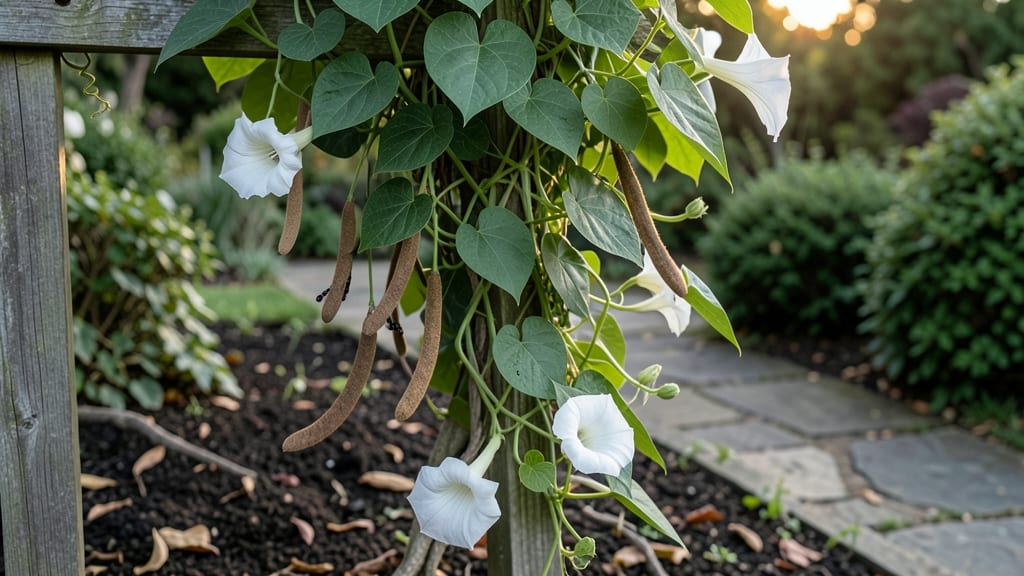
Harvesting moon vine seed pods turns summer’s vines into next year’s garden stars—no tools, no mess, just nature’s timing. 🌿 These papery pods split open when ready, releasing seeds that’ll grow into fast-climbing beauties with zero effort from you.
I’ve saved seeds from my moon vines for three years now, and they’re always eager to sprout when the soil warms. The magic happens in late summer when pods turn brown and papery—just shake them into a bag or let them drop naturally.
Store them in a cool, dry spot until spring, where they’ll stay viable for 2-3 years if kept dry. Moon vines thrive in well-draining soil and love to scramble up trellises, fences, or even arbors, making them perfect for vertical spaces.
Once planted, seedlings emerge in 7-14 days if kept moist and warm. They grow aggressively, so give them space or prune regularly to control their sprawl. The first blooms arrive in 60-90 days, and those iconic white, moon-like flowers will attract pollinators all season.
Troubleshooting is easy: if seeds take longer to sprout, soak them overnight to break dormancy. Mold? Reduce humidity by spacing plants apart. And if your vines flop instead of climb, add a sturdy trellis early—they’ll thank you with lush, fragrant growth.
📚 In This Guide
- What you need
- Instructions
- Tips and common mistakes
- Wrapping up and next steps
What you need
- ● Moon vine plants (healthy, mature vines with seed pods—look for Ipomoea alba or similar varieties).
- ● Pruning shears or sharp scissors (sterilized to avoid disease transfer).
- ● Paper bags or breathable mesh sacks (1–2 per plant, labeled with plant name and date).
- ● Drying tray or screen (to spread pods evenly; a wire rack or cardboard works).
- ● Small envelopes or seed packets (kraft paper or resealable bags with silica gel packets for long-term storage).
- ● Permanent marker (to label pods/seeds with variety and year).
- ○ Glove (optional but recommended)—moon vine pods can be prickly!
- ● Seed drying tray with ventilation holes (speeds up drying time).
- ● Desiccant packets (for extra-long seed storage).
- ● Humidity monitor (to ensure pods dry to <10% moisture).
- ● Camera or phone (to document pod stages for future reference).
- ● Compost bin (for discarded plant debris or non-viable pods).
Step-by-Step instructions for harvesting moon vine seed pods
Here's how to collect seeds effortlessly—no pruning, no mess, just nature's timing.
🌱 Step 1: Identify and Monitor Mature Seed Pods
Moon vine (Ipomoea alba) produces distinctive white, trumpet-shaped flowers that develop into round, papery seed pods. Wait until the pods turn a pale brown color and begin to dry out completely—this usually happens in late summer or early fall. The pods will feel crisp to the touch rather than soft or leathery.
I like to check my vines every few days during this stage. Give the pods a gentle squeeze—if they crumble slightly, they're ready. Avoid harvesting when the pods are still green or slightly damp, as the seeds won't be fully matured and may not germinate properly.
⏰ Step 2: Time the Harvest for Natural Release
Moon vine pods open on their own when fully dry, releasing seeds in a slow, natural process. To collect seeds without losing them to the wind, place a large, shallow tray (like a 12x18-inch baking sheet) or cardboard box under the plant. Position it so that any falling seeds land inside.
Leave the tray in place for 3-5 days during dry weather. You'll know it's working when you see seeds accumulating in the bottom. This method captures seeds as they naturally disperse, ensuring you get the maximum yield with zero effort.
🪴 Step 3: Clean and Store the Collected Seeds
Once you've gathered enough seeds, transfer them to a clean, dry surface. Use a small hand fan or gently blow on the seeds to remove any remaining chaff or debris. Moon vine seeds are relatively large and easy to handle—you won't need to sift through fine particles like with some other plants.
Store the seeds in a paper envelope or small glass jar with a tight lid. Label it with the date and variety (if applicable). Keep the container in a cool, dry place—like a pantry or seed storage box—where the temperature stays between 60-70°F. Seeds remain viable for 2-3 years under these conditions.
🌿 Step 4: Prepare for Next Season's Planting
When you're ready to plant, soak the seeds in lukewarm water for 12-24 hours to soften the outer coating and speed up germination. This step is especially helpful if you're growing moon vine in a cooler climate. After soaking, drain the water and plant the seeds ½ inch deep in well-draining soil.
Moon vine thrives in full sun to partial shade and tolerates a variety of soil types. Keep the soil consistently moist but not soggy until the plants establish themselves. You'll see germination in 7-14 days, depending on temperature and humidity.
Tips & tricks for perfect moon vine seed pod harvesting
These little details make all the difference when collecting moon vine seeds—trust me, it's worth paying attention.
Pod Maturity Test: In Step 1, when checking for mature pods, look for that crisp texture and pale brown color—but don't rely solely on color. The real test is the gentle squeeze: mature pods should crumble slightly under light pressure. I've learned this the hard way after collecting seeds from pods that were still slightly green, which resulted in poor germination rates. The seeds need that full drying process to develop properly.
Weather Watch: For Step 2, timing your 3-5 day seed collection period during dry weather is crucial. Even a light rain can wash seeds away or make them too damp for proper storage. I keep an eye on the forecast and only set out my collection tray when dry conditions are predicted for at least 3 days. A clear plastic sheet draped over the tray adds an extra layer of protection if you're in an area prone to sudden showers.
Storage Wisdom: When storing your seeds in Step 3, I've found that adding a small packet of silica gel to the storage container helps maintain that critical 60-70°F temperature range and prevents moisture buildup. The seeds will last their full 2-3 years this way, and you won't have to worry about mold or spoilage. Just place the silica packet in the container before sealing it—it's a gardener's secret that makes all the difference.
Pro Tips for Moon Vine Seed Pods
- These little details make all the difference when collecting moon vine seeds—trust me, it's worth paying attention.
- Pod Maturity Test: In Step 1, when checking for mature pods, look for that crisp texture and pale brown color—but don...
- Weather Watch: For Step 2, timing your 3-5 day seed collection period during dry weather is crucial. Even a light rai...
Frequently asked questions
Got questions about moon vine seed pods?
You’re not alone! Here are answers to the most common queries to help you master hands-off harvesting and zero-waste seed saving with ease.
How do I know when moon vine seed pods are ready for harvest?
Moon vine seed pods typically turn brown, dry, and papery when ready—usually 6–8 weeks after flowering. Gently squeeze a pod; if seeds rattle inside, it’s time to harvest! Avoid harvesting green pods, as they won’t store well.
Can I save seeds from moon vine pods indoors?
Yes! Place fully dried pods in a paper bag and store them in a cool, dry spot (like a pantry) for 2–4 weeks. This mimics outdoor drying while preventing mold. Just avoid humidity—moisture is the enemy of seed viability!
What’s the best way to clean moon vine seeds?
Rub the dried pods between your palms or use a fine-mesh sieve to separate seeds from chaff. For stubborn debris, a quick rinse in lukewarm water (then air-dry) works. Pro tip: Fermenting seeds in water for 24 hours can improve germination!
Why won’t my moon vine seeds germinate?
Common culprits: underripe pods, improper storage (too wet/damp), or old seeds (viability drops after 2–3 years). Try stratification (mimicking winter cold) for stubborn seeds—place them in a damp paper towel in the fridge for 4–6 weeks before planting.
Are moon vine seed pods edible or toxic?
While the seeds themselves are non-toxic and edible (though bland), the pods and plant parts contain mild toxins that can cause stomach upset if consumed in large quantities. Stick to seed-saving—leave the vine itself for ornamental use only!
Wrapping up and next steps
Moon vine seed pods offer a simple, sustainable way to save seeds—no fuss, no waste! By letting nature do the work, you’re not just harvesting seeds but embracing a hands-off, zero-waste approach that benefits your garden and the planet.
Whether you’re a seasoned gardener or just starting out, this method is perfect for effortless seed saving.
Ready to give it a try? Start small—grow a few moon vines this season, collect those seed pods, and watch your garden thrive with homegrown, heirloom-quality seeds! 🌱✨