
Propagation
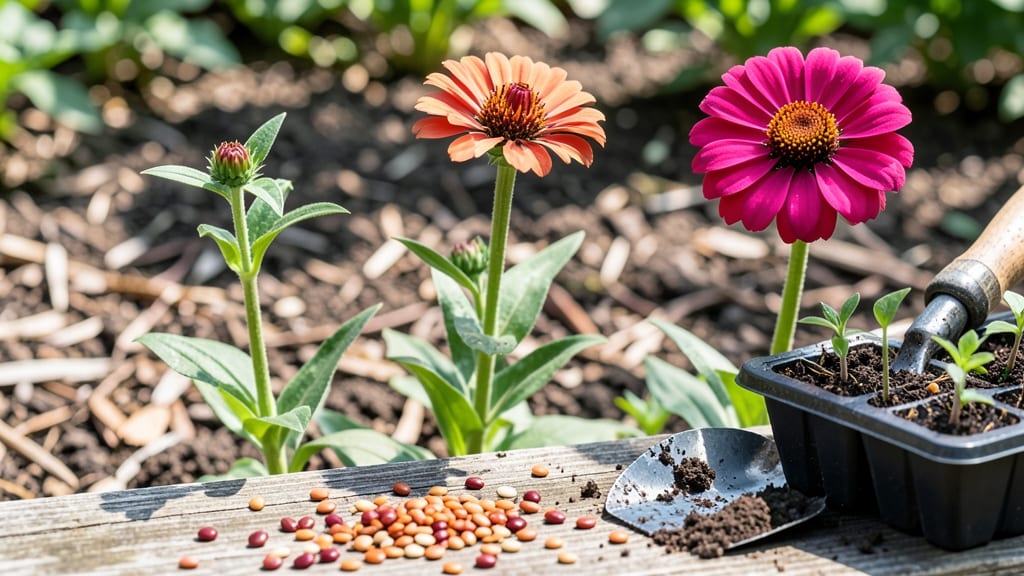
Growing zinnias from seed to flower is like watching a 60-day burst of color—and the secret to twist-free stems starts the moment you handle those tiny seeds. 🌱 I’ve grown thousands of zinnias, and the ones that stand tall without snapping all begin with the right soil prep and gentle handling.
Skipping these early steps means floppy stems by summer, but do it right and you’ll have bouquets that last weeks in vases.
The magic happens in three simple stages: starting seeds indoors or outdoors (depending on your last frost date), hardening off seedlings before transplanting, and giving them full sun and consistent moisture once planted.
Most beginners overwater or crowd seedlings too early—both kill zinnias faster than anything else. I learned that the hard way when my first batch flopped after a week of soggy soil.
By week 6, you’ll see those first true leaves unfurl, followed by buds forming in just 4-5 weeks after transplanting. The blooms arrive faster than most annuals, and with proper deadheading, your plants will keep producing until frost.
Even my blackest thumbs can’t mess this up once you know the tricks—like pinching back leggy seedlings and avoiding nitrogen-heavy fertilizers.
Whether you’re growing zinnias for cut flowers, pollinators, or just bold garden color, this method works in containers, raised beds, or in-ground soil. The key is patience—those first leaves might look fragile, but they’ll soon support football-sized blooms that brighten every summer day. Let’s get those seeds planted!
📚 In This Guide
- What you need
- Instructions
- Tips and common mistakes
- Wrapping up and next steps
What you need
- ● Zinnia seeds – Choose heirloom or hybrid varieties (e.g., 'Benary’s Giant', 'Profusion'). Quantity: 5–10 seeds per pot or 1 lb for direct sowing (covers ~1,000 sq ft).
- ● Seed-starting trays or pots – 2–3 inch cells or biodegradable pots (for transplanting). Quantity: 1 tray (50+ cells) or 2–3 pots per seed batch.
- ● Seed-starting mix – Lightweight, sterile mix (e.g., Pro-Mix or Black Gold Seedling Mix). Quantity: 1–2 cubic feet.
- ○ Grow lights or sunny windowsill – 12–16 hours of light daily (LED grow lights work great). Optional: Heat mat (70–75°F) for faster germination.
- ● Watering can or spray bottle – Fine mist setting to avoid displacing seeds.
- ● Fertilizer – Balanced liquid fertilizer (e.g., 10-10-10 or fish emulsion). Dilution: Half-strength for seedlings.
- ● Twine or stakes – 18–24 inch stakes (for taller varieties like 'Benary’s Giant'). Quantity: 1–2 per plant.
- ● Well-draining soil – Amend with compost (1 part compost to 3 parts soil). pH: 6.0–7.0.
- ● Mulch – Straw or shredded leaves to retain moisture (2–3 inches).
- ○ Drip irrigation or soaker hose – Optional: Self-watering planters for low-maintenance growth.
- ● Row covers or shade cloth – For young seedlings (30–50% shade if in hot climates).
- ● Insect spray (neem oil or pyrethrin) – Preemptive measure against aphids or spider mites.
How to grow zinnias from seed to blooms in 60 days
Here's the method I use to get vibrant zinnias from seed to full bloom without tangled stems or leggy seedlings.
🌱 Step 1: Start Seeds Indoors 4-6 Weeks Before Last Frost
Fill small seed trays with sterile seed-starting mix and moisten until damp but not soggy. Press the soil surface lightly to create a firm planting bed—zinnias germinate best when the soil is compacted just enough to hold seeds in place. Plant seeds ¼ inch deep, spacing them ½ inch apart in rows.
Cover lightly with additional mix and mist gently until the surface looks evenly moist. Place trays in a warm spot at 70-75°F—a seedling heat mat speeds germination significantly. You'll see sprouts in 5-10 days, but don't be surprised if some take longer, especially in cooler homes. Once 50% of seeds have sprouted, remove any covers immediately to prevent fungal growth.
☀️ Step 2: Provide Bright, Indirect Light Immediately
Zinnia seedlings need 14-16 hours of light daily from day one to prevent leggy growth. Position seedlings under grow lights or within 4 inches of a south-facing window. If using natural light, rotate trays daily so seedlings grow straight rather than leaning toward the light source.
Watch for the first set of true leaves—these will be smaller than the initial seed leaves and appear 7-10 days after germination. At this stage, fertilize lightly with a diluted balanced liquid fertilizer (5-5-5) to encourage strong root development. Avoid overwatering; keep the soil surface dry between waterings to prevent damping-off disease.
🪴 Step 3: Harden Off and Transplant Outdoors
Two weeks before your last frost date, begin hardening off seedlings by placing them outside in a sheltered spot for 1-2 hours daily. Gradually increase their outdoor time over 7-10 days, moving them to sunnier locations each day. This gradual transition prevents transplant shock and helps seedlings acclimate to outdoor conditions.
Choose a sunny garden spot with 6+ hours of direct sunlight and well-draining soil. Transplant seedlings 12-18 inches apart in rows spaced 18-24 inches apart to allow for airflow and reduce disease risk. Water deeply at the base immediately after transplanting to help roots establish in the new soil.
💧 Step 4: Maintain Consistent Water and Fertilizer
Zinnias thrive with 1 inch of water weekly, but they're drought-tolerant once established. Water at the base of plants in the morning to allow foliage to dry quickly and reduce fungal diseases. Avoid overhead watering, which can cause mildew on leaves and flowers.
Apply a low-nitrogen fertilizer (like 7-7-7) every 3-4 weeks to promote strong blooms. You'll notice new buds forming 4-6 weeks after transplanting, signaling that your plants are ready for their first harvest. Deadhead spent blooms regularly to encourage continuous flowering throughout the season.
✂️ Step 5: Prune and Support for Long-Stemmed Blooms
To prevent stems from twisting and ensure long, straight flower stems, pinch back the main stem 2-3 inches above the fourth set of true leaves. This encourages bushier growth and more side shoots. Support tall varieties with stakes or cages early to prevent wind damage and maintain upright growth.
Harvest flowers in the morning when buds are fully open but before they begin to wilt. Cut stems at a 45-degree angle just above a leaf node to encourage branching. With proper care, you'll enjoy vibrant zinnias from early summer until the first frost, often producing 100+ blooms per plant in a single season.
Tips & tricks for growing perfect zinnias
Here's what I've learned after years of growing zinnias—these tricks will help you avoid leggy seedlings and tangled stems while maximizing your bloom count.
Soil Firmness Secret: In Step 1, when pressing the soil surface lightly, aim for firmness similar to a damp sponge—just enough resistance to hold seeds in place without compacting too tightly. This prevents seeds from washing away during watering while promoting even germination. I've found that using a small wooden board or the back of a spoon works best for consistent pressure.
Light Timing Strategy: For the critical 14-16 hours of light in Step 2, consider using a timer for your grow lights. Zinnias won't tolerate inconsistent light exposure—even missing an hour can cause seedlings to stretch toward any available light source. If using natural light, position your seedlings within 4 inches of the window and rotate trays every 2-3 days to prevent leaning.
Hardening Off Hack: When beginning the 1-2 hour daily outdoor sessions in Step 3, I recommend placing seedlings in a sheltered spot that receives morning sun but is protected from afternoon breezes. This gradual transition helps prevent transplant shock while allowing seedlings to acclimate to outdoor conditions without sudden temperature fluctuations.
Pruning Precision: In Step 5, when pinching back the main stem 2-3 inches above the fourth set of true leaves, use clean, sharp scissors or pruners to make clean cuts. This encourages bushier growth and prevents the spread of disease through jagged cuts. I've noticed that plants pinched at this exact height produce significantly more side shoots and stronger stems.
Pro Tips for Zinnia From Seed To Flower
- Here's what I've learned after years of growing zinnias—these tricks will help you avoid leggy seedlings and tangled ...
- Soil Firmness Secret: In Step 1, when pressing the soil surface lightly, aim for firmness similar to a damp sponge—ju...
- Light Timing Strategy: For the critical 14-16 hours of light in Step 2, consider using a timer for your grow lights. ...
Frequently asked questions
Got questions about growing zinnias from seed to show-stopping blooms? You’re not alone! Here are answers to the most common queries—so you can skip the guesswork and dive right into your twist-free, 60-day zinnia journey.
How long does it take for zinnia seeds to germinate?
Zinnia seeds typically sprout in 5–10 days after planting, depending on temperature and moisture. For fastest results, keep soil consistently warm (70–75°F) and moist (but not soggy). If you’re starting indoors, use a heat mat—patience pays off!
Can I plant zinnia seeds directly in the garden, or should I start them indoors?
Both work! For earlier blooms, start seeds indoors 4–6 weeks before your last frost. But if you’re in a warm climate or short on time, direct sowing after soil temps hit 50°F+ is totally fine. Just thin seedlings to 12–18 inches apart for happy, healthy plants.
Why aren’t my zinnia seeds sprouting? Troubleshooting tips!
No sprouts? Check these fixes:
Too cold? Zinnias need warmth—wait until soil is at least 50°F.
Too dry? Keep soil moist but not waterlogged (a spray bottle helps).
Old seeds? Zinnia seeds last 1–2 years; test a few in a damp paper towel first.
Depth issue? Plant seeds ¼ inch deep—deeper = slower (or no) germination.
Still stuck? Try a fresh batch or ask your local nursery for tips!How do I keep zinnias blooming all season?
Deadhead spent blooms regularly (snip just above the next set of leaves) to encourage nonstop flowers. Also:
- Feed with balanced fertilizer (10-10-10) every 3–4 weeks.
- Water at the base (avoid wetting leaves to prevent mildew).
- Pinch back young plants to encourage bushier growth.
What’s the best zinnia variety for beginners?
Start with ‘Benary’s Giant’ or ‘Thumbelina’—they’re hardy, disease-resistant, and bloom like crazy. For height, try ‘State Fair’ (up to 4 feet!), and for color variety, ‘Crystal’ series offers pastel shades. Pro tip: Mix varieties for a nonstop floral show!
Wrapping up and next steps
Growing zinnias from seed to flower is a rewarding journey—one that delivers vibrant blooms in just 60 days with minimal fuss! Whether you're a beginner or a seasoned gardener, these cheerful flowers prove that beauty thrives with patience and care.
Now that you’re armed with the right tips, dive in and plant those seeds—your garden (and pollinators!) will thank you.
🌱 Next step: Mark your calendar for 60 days of growth and enjoy the process—from tiny sprouts to twist-free, showstopping blooms! 🌸